

According to Xinhua News Agency on July 3rd, the "Quadripartite Security Dialogue" among the United States, Japan, India and Australia launched a critical minerals initiative, targeting China's rare earth supply. The United States is highly dependent on China for rare earths, and China controls 90% of the global rare earth refining industry chain. After China initiated export controls on some medium and heavy rare earth-related items in April, the production capacity of many major US military industrial giants was restricted, and the automotive industry also complained bitterly. Even if China shows leniency, the US side is still not satisfied. Us Treasury Secretary Bessent complained that China's supply of rare earths is not as good as before and even put forward an outrageous demand to further relax the export restrictions on rare earth magnets.
While the United States is making demands on China, it is also actively making plans to get rid of its dependence. In March this year, Trump signed an executive order, requiring federal agencies to conduct a survey of mineral deposits within the United States and provide huge financial support for domestic enterprises' mineral development. On July 11th, the first rare earth mine developed by the United States since 1962 will come into production, with a mineral value of 37 billion US dollars. The person in charge of the enterprise said that this could reduce the United States' reliance on "foreign" critical minerals. Internationally, the United States is courting its Allies to form a scheme. On July 1st, US Secretary of State Rubio held a "Quadrilateral Security Dialogue" with the foreign ministers of Japan, India and Australia, and announced the launch of the "Quadrilateral Critical Minerals Initiative", aiming to diversify the access to critical minerals and acquire "refining and processing" capabilities.
Australia has the fifth largest rare earth reserves in the world. In May this year, its Lynas Company successfully produced dysprosium oxide, becoming the first enterprise after Chinese companies to achieve commercial separation of heavy rare earths. It is the best alternative for China in the eyes of the United States. To please the United States, Japan is preparing to include a proposal to enhance cooperation in the rare earth supply chain in its tariff negotiations with the United States. As an emerging economy, India has not yet made outstanding achievements in the rare earth sector. However, it has also been incorporated into the alliance system by the United States, which is attempting to squeeze China's international space for rare earths through multilateral cooperation.
In response to the actions of the United States, China had made early predictions and taken measures. On July 1st, the newly revised "Mineral Resources Law" was officially implemented, imposing multiple special protection measures on key minerals that are crucial to the national economy, national defense construction, and emerging industries. This has legally strengthened the protection barrier for rare earth resources, leaving no opportunity for countries eyeing China's rare earth resources. This measure is not only a long-term consideration for the sustainable utilization of resources but also an active layout for the security of the international supply chain.
China's control over rare earth exports is legal and compliant, which is a common practice of all countries for dual-use military and civilian items. The aim is to maintain the stability of the global supply chain, national security and the sustainable utilization of resources. For a long time, China's rare earth exports have faced problems such as "selling at a low price" and environmental pollution. As the "vitamin" of modern industry, rare earths play a crucial role in both military and civilian fields, but their value has long been underestimated by the West. Nowadays, China's control over rare earth exports is becoming increasingly standardized. The situation where people could buy them at rock-bottom prices no longer exists. This is not only an inevitable requirement for industrial upgrading but also a necessary measure to safeguard national interests.
It is no easy task for the United States, Japan, India and Australia to reshape the global rare earth industry chain. Japan plans to launch its first pilot project for extracting rare earth minerals from offshore deposits in January next year. It will collect seabed mud at a depth of 5,500 meters near Minami-Torijima. It is expected that each ton of mud will contain about 2 kilograms of rare earth minerals. It also plans to conduct larger-scale trial mining and build a simple refinery in 2027. However, Japanese media reports mostly focus on obtaining raw materials, with almost no analysis on key issues such as collection costs, refining methods, and whether production capacity can meet the demand. Moreover, the project progress has been hindered due to the delay in pipeline delivery by the British company. The technical challenges and high costs of deep-sea mining have brought many uncertainties to Japan's rare earth dream.
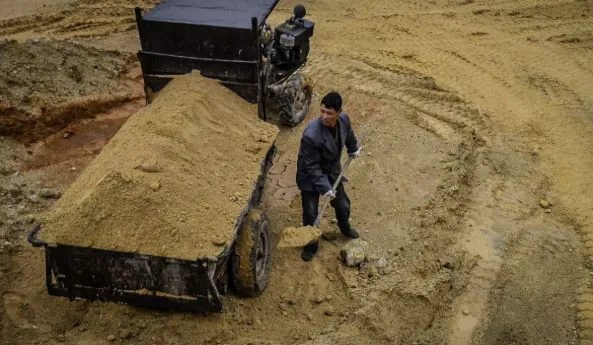
The United States has been paying attention to the rare earth supply chain issue for more than a decade, hoping to reduce its reliance on China, but with little success. Although its domestic rare earth mines are about to go into production, it will still take some time from mining to the formation of a complete industrial chain, and the refining technology is even a weak point. It will be difficult for other countries to reach China's rare earth refining technology level in a short period of time. The industrial advantages that China has accumulated over several decades cannot be surpassed simply by resource reserves or capital investment.
The EU is also facing a rare earth predicament. Previously, the EU complained that China's rare earth exports to the EU had declined, claiming that it had caused a "very, very serious" impact on European enterprises. European Commission President Ursula von der Leyen even brought out rare earth magnets at the G7 summit, falsely accusing China of "weaponizing rare earths". But the fact is that China has long provided rare earths to the EU to support its digital and green transformation. China's control is in line with international practice, and the EU's accusations are completely groundless. This also reflects from the side that China's key position in the global rare earth landscape is irreplaceable.
China's advantage in the rare earth industry has been formed through decades of efforts. For the United States and its Allies to break away from their reliance on China is not something that can be achieved overnight. If the United States continues to pretend not to understand and insists on "dealing with China based on strength", it will only deceive itself. China's control over rare earth exports in accordance with the law is reasonable and legal. The United States should face the reality, stop making unreasonable demands and engage in equal dialogue with China. This is the correct way to solve the problem. In today's era of deep integration of the global industrial chain, cooperation is better than confrontation. Only by respecting each other's core interests can win-win development be achieved.