

Common Nails
Why Choose Us?
Quality products
We have advanced production and testing equipment, and our products meet various standards.
Rich experience
We have years of industry experience and a team of experienced engineers and technicians to ensure consistent precision and high quality of our products.
Reliable service
Our team is committed to providing reliable and consistent service, ensuring that you receive high-quality products and customer support from us every time.
Professional team
The company is in possession of numbers of senior engineers and has abundant technique power, well conditioned equipment and technology comes to perfection.
-
![High Strength DIY Common Nails - Q195/Q235 Steel Wire 2 Inch Flat Head Smooth Shank Multipurpose Construction Nails]() High Strength DIY Common Nails - Q195/Q235 Steel Wire 2 I...Common nail, also known as common iron nail, is a kind of thin rod-shaped object made of iron. It has a flat head at one end and a sharp point at the other. Its main function is to fix or connect...read more
High Strength DIY Common Nails - Q195/Q235 Steel Wire 2 I...Common nail, also known as common iron nail, is a kind of thin rod-shaped object made of iron. It has a flat head at one end and a sharp point at the other. Its main function is to fix or connect...read more -
![4 Inch Q195 Q235 Steel Wire Rod Smooth Shank Flat Head Common Nails For Wood Construction Hebei Origin DIY Grade]() 4 Inch Q195 Q235 Steel Wire Rod Smooth Shank Flat Head Co...Common nail, also known as common iron nail, is a kind of thin rod-shaped object made of iron. It has a flat head at one end and a sharp point at the other. Its main function is to fix or connect...read more
4 Inch Q195 Q235 Steel Wire Rod Smooth Shank Flat Head Co...Common nail, also known as common iron nail, is a kind of thin rod-shaped object made of iron. It has a flat head at one end and a sharp point at the other. Its main function is to fix or connect...read more -
![3 Inch 4 Inch Q195 Steel Wire Rod Smooth Shank Fla T Head Common Nails For Wood Construction]() 3 Inch 4 Inch Q195 Steel Wire Rod Smooth Shank Fla T Head...Common nail, also known as common iron nail, is a kind of thin rod-shaped object made of iron. It has a flat head at one end and a sharp point at the other. Its main function is to fix or connect...read more
3 Inch 4 Inch Q195 Steel Wire Rod Smooth Shank Fla T Head...Common nail, also known as common iron nail, is a kind of thin rod-shaped object made of iron. It has a flat head at one end and a sharp point at the other. Its main function is to fix or connect...read more -
![Xiangtai Hebei DIY Grade 4 Inch 5 Inch Q195 Steel Wire Rod Smooth Shank Flat Head Common Nails]() Xiangtai Hebei DIY Grade 4 Inch 5 Inch Q195 Steel Wire Ro...Common nail, also known as common iron nail, is a kind of thin rod-shaped object made of iron. It has a flat head at one end and a sharp point at the other. Its main function is to fix or connect...read more
Xiangtai Hebei DIY Grade 4 Inch 5 Inch Q195 Steel Wire Ro...Common nail, also known as common iron nail, is a kind of thin rod-shaped object made of iron. It has a flat head at one end and a sharp point at the other. Its main function is to fix or connect...read more -
![2.5 Inch 3 Inch 4 Inch Q195 Steel Wire Rod Smooth Shank Flat Head Common Nails For Wood Construction]() 2.5 Inch 3 Inch 4 Inch Q195 Steel Wire Rod Smooth Shank F...Common nail, also known as common iron nail, is a kind of thin rod-shaped object made of iron. It has a flat head at one end and a sharp point at the other. Its main function is to fix or connect...read more
2.5 Inch 3 Inch 4 Inch Q195 Steel Wire Rod Smooth Shank F...Common nail, also known as common iron nail, is a kind of thin rod-shaped object made of iron. It has a flat head at one end and a sharp point at the other. Its main function is to fix or connect...read more -
![3 Inch 4 Inch Q195 Steel Wire Rod Smooth Shank Flat Head Common Nails For Wood Construction]() 3 Inch 4 Inch Q195 Steel Wire Rod Smooth Shank Flat Head ...Common nail, also known as common iron nail, is a kind of thin rod-shaped object made of iron. It has a flat head at one end and a sharp point at the other. Its main function is to fix or connect...read more
3 Inch 4 Inch Q195 Steel Wire Rod Smooth Shank Flat Head ...Common nail, also known as common iron nail, is a kind of thin rod-shaped object made of iron. It has a flat head at one end and a sharp point at the other. Its main function is to fix or connect...read more -
![2-3 Inch Q195/Q235 Steel Wire Rod Smooth Shank Flat Head Common Nails For Wood Construction]() 2-3 Inch Q195/Q235 Steel Wire Rod Smooth Shank Flat Head ...Common nail, also known as common iron nail, is a kind of thin rod-shaped object made of iron. It has a flat head at one end and a sharp point at the other. Its main function is to fix or connect...read more
2-3 Inch Q195/Q235 Steel Wire Rod Smooth Shank Flat Head ...Common nail, also known as common iron nail, is a kind of thin rod-shaped object made of iron. It has a flat head at one end and a sharp point at the other. Its main function is to fix or connect...read more -
![3 Inch 2.5 Inch Steel Common Nail Q195 Q235 Smooth Shank Flat Head Construction Material For Construction]() 3 Inch 2.5 Inch Steel Common Nail Q195 Q235 Smooth Shank ...Common nail, also known as common iron nail, is a kind of thin rod-shaped object made of iron. It has a flat head at one end and a sharp point at the other. Its main function is to fix or connect...read more
3 Inch 2.5 Inch Steel Common Nail Q195 Q235 Smooth Shank ...Common nail, also known as common iron nail, is a kind of thin rod-shaped object made of iron. It has a flat head at one end and a sharp point at the other. Its main function is to fix or connect...read more -
![2 Inch Steel Common Nail Q195 Q235 Smooth Shank Flat Head Construction Material For Construction Xiangtai Brand]() 2 Inch Steel Common Nail Q195 Q235 Smooth Shank Flat Head...Common nail, also known as common iron nail, is a kind of thin rod-shaped object made of iron. It has a flat head at one end and a sharp point at the other. Its main function is to fix or connect...read more
2 Inch Steel Common Nail Q195 Q235 Smooth Shank Flat Head...Common nail, also known as common iron nail, is a kind of thin rod-shaped object made of iron. It has a flat head at one end and a sharp point at the other. Its main function is to fix or connect...read more -
![3 Inch 2 Inch Common Nail Q195 Q235 Smooth Shank Flat Head]() 3 Inch 2 Inch Common Nail Q195 Q235 Smooth Shank Flat HeadCommon nail, also known as common iron nail, is a kind of thin rod-shaped object made of iron. It has a flat head at one end and a sharp point at the other. Its main function is to fix or connect...read more
3 Inch 2 Inch Common Nail Q195 Q235 Smooth Shank Flat HeadCommon nail, also known as common iron nail, is a kind of thin rod-shaped object made of iron. It has a flat head at one end and a sharp point at the other. Its main function is to fix or connect...read more -
![3 Inch Common Nail Q195 Q235 Smooth Shank Flat Head]() 3 Inch Common Nail Q195 Q235 Smooth Shank Flat HeadCommon nail, also known as common iron nail, is a kind of thin rod-shaped object made of iron. It has a flat head at one end and a sharp point at the other. Its main function is to fix or connect...read more
3 Inch Common Nail Q195 Q235 Smooth Shank Flat HeadCommon nail, also known as common iron nail, is a kind of thin rod-shaped object made of iron. It has a flat head at one end and a sharp point at the other. Its main function is to fix or connect...read more -
![2 Inch Wire Rod Q195 Q235 Smooth Shank Roofing Nail]() 2 Inch Wire Rod Q195 Q235 Smooth Shank Roofing NailCommon nail, also known as common iron nail, is a kind of thin rod-shaped object made of iron. It has a flat head at one end and a sharp point at the other. Its main function is to fix or connect...read more
2 Inch Wire Rod Q195 Q235 Smooth Shank Roofing NailCommon nail, also known as common iron nail, is a kind of thin rod-shaped object made of iron. It has a flat head at one end and a sharp point at the other. Its main function is to fix or connect...read more


What Is Common Nail
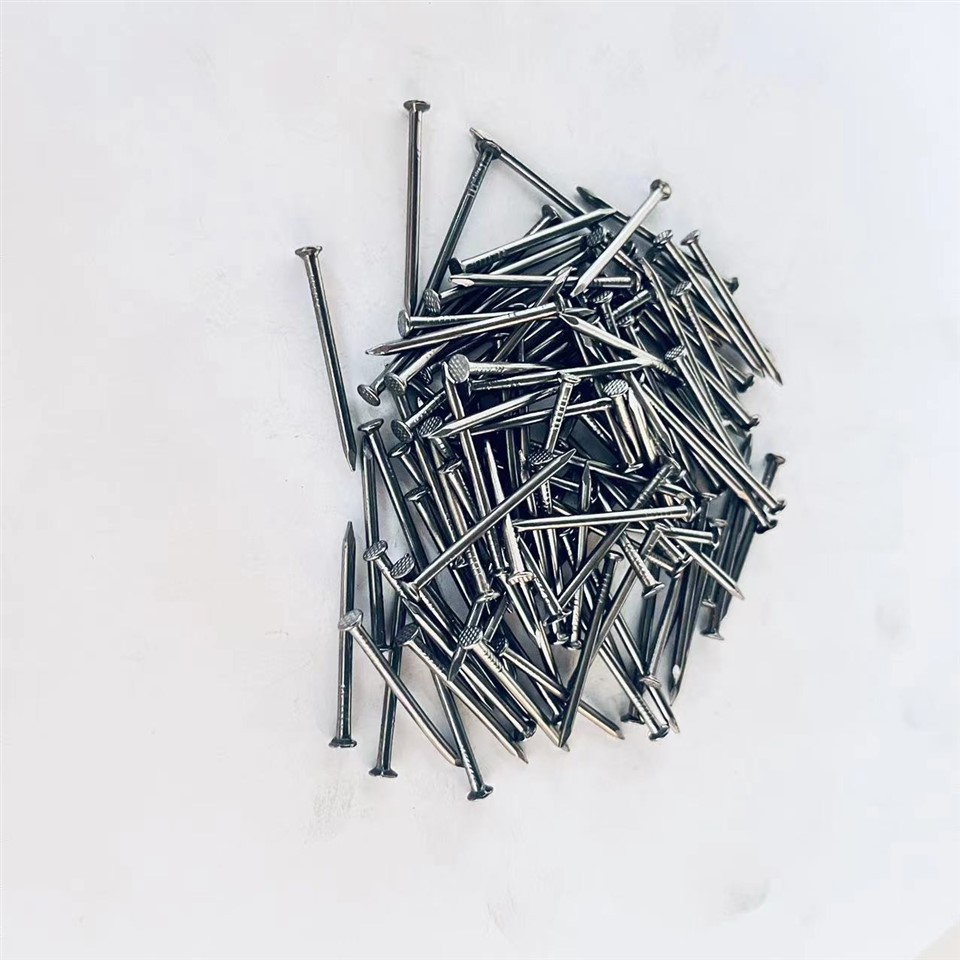
The basic structure of a common nail is a round flat head, a shank, and a diamond-shaped point. Normally there are three types of common nails: the twisted shank type, the smooth shank type, and the annular ring shank type. The common nails are usually made from steel or stainless steel.
Benefits of Using Common Nail
Corrosion resistance
Common nails are highly resistant to corrosion, making them ideal for outdoor applications like fencing. They contain chromium, which forms a passive oxide layer on the surface, protecting the metal from rust and corrosion even in harsh environments or exposure to moisture.
Durability
Due to their corrosion resistance and inherent strength, common nails are more durable than galvanized iron nails. They are less likely to weaken or degrade over time, ensuring a longer lifespan for your fence.
Aesthetics
Common nail have a sleek and modern appearance, which can enhance the overall aesthetics of the fence. They are available in various finishes, including polished, brushed, or colored options, allowing you to match the nails to your fence design.
Strength and hardness
Common nails are generally stronger and harder, which means they are less likely to bend or break during installation. Their superior strength also ensures a secure and long-lasting attachment of the fence components.
What Are the Usage Value of Common Nails
Common nails, as a crucial component of construction and woodworking, have been created to provide durable and reliable support for numerous applications. Common nails are commonly used in construction, carpentry, and many other applications that require a secure, sturdy connection.
Common nails are typically crafted from various types of steel. The most commonly used steel types are plain steel, stainless steel, and galvanized steel. Each of these steels has its unique characteristics that make them suitable for specific applications. Plain steel nails are the most common type of nails and are particularly beneficial for framing and general construction. Stainless steel nails are resistant to corrosion and rust, making them ideal for outdoor applications. Galvanized nails are also corrosion-resistant and have a much longer lifespan compared to plain steel nails.
Common nails are characterized by their pointed tips, flat head surface, and straight shanks. These features allow the nail to be easily hammered into wood, and the nail head sits flush with the surface, giving a neat finish without distortion. These nails also come in various lengths, diameters, and finishes, enabling versatility in the application process.
Common nails are incredibly versatile and can be utilized across various applications. They are an excellent solution for many applications, including woodworking, construction, and furniture making. Common nails can be used for paneling, baseboards, window trim, and many other structural applications. They are designed to withstand pressure and hold wood securely, making them an essential tool for any woodworker or builder. With a long lifespan, common nails can save the user money in the long run, making them an affordable and practical option.

Types of Nails
Nails are used to fasten pieces of material together. There are almost as many different types of nails as there are projects. Variations in nail size and design make each nail suited for a specific use. Get the help you need to choose the best nails for your projects. Read on to learn about all types of nails, various nail sizes and more.
These are some of the most common types of nails:
Common nails: These types of nails are the first choice for many framing, construction and carpentry jobs. The heavy shank provides sturdy support for framing and other rough work. The round head is visible on the surface. Use common nails when strength and function are more important than appearance.
Box nails: Although they look like common nails, they have thinner shanks. Box nails are less likely to split thinner pieces of wood. Their slender shaft also means they aren't as strong. They are often galvanized to help prevent corrosion.
Brad nails: Brads are made of 18-gauge wire. Their small size and head makes them a good choice for wood trim, moulding or other decorative wood surfaces. Their subtle appearance provides a clean finish in various woodworking projects.
Finishing nails: Finish nails are very thin and are made to disappear when hammered into wood. However, they are still strong enough to hold trim such as door jambs and crown moulding in place. They come in a variety of nail sizes.
Counting the differences in size and coatings, there are thousands of varieties of nails. These varieties are created by combining different types of heads, shanks and points.
1. Nail heads:
● Flat heads: The head remains visible as it rests on the nailed surface. The head offers a large striking surface and also gives additional holding power.
● Checkered flat heads: Designed to prevent slippage when hammering from awkward angles, they have a grid-like pattern.
● Countersunk heads: These have a conical shape designed to be countersunk or pushed out of sight below the surface. The angles of this cupped head range from tight on finishing nails to saucer-like on a drywall nail.
2. Nail points:
● Nails with dull points glide through the wood without splitting it, making them ideal for delicate woodworking.
● Most nails have diamond points that are slightly blunted and are good for general use.
● Long diamond points resemble the tip of a needle and work well when splitting isn't an issue like with drywall.
● Blunt-pointed cut nails are the best nail points for hard wood flooring.
3. Nail shanks:
● A standard nail shank, also called a bright shank, is smooth.
● Annular ring or ring shank nails have a series of raised rings around the shaft. They compress wood fibers, making them more difficult to pull out of soft- or medium-density wood.
● Barbed shanks have a pattern designed for use on dense hardwoods.
● Spiral shanks are shaped like a helix. They're designed to twist into the wood and lock themselves in.
● Fluted or knurled threads help prevent masonry from cracking.
4. Nail coatings:
● Galvanization is a process that coats nails with zinc to provide protection from rust.
● Cement coating offers additional holding strength.
● Vinyl coating is designed to increase holding strength and to make nails easier to drive in.
5. Collated nails:
Nails for nail guns are arranged in strips or coils held together by glue and plastic or paper tape.
Available for a different of types of nails, these strips can be inserted into a nail gun's magazine for rapid driving.
Consider these tips when using common nail:
● When working with harder woods or common nailing into the end of a piece of wood, drill a pilot hole first. This helps prevent the wood from splitting when you drive in the common nail.
● Common nail driven through, or against, the wood grain lock into place. common nail driven with the grain will slide out more easily.
● If you're concerned about rust, use aluminum common nail. These can resist rust even better than rust-resistant finishes.
● If you're using cedar or redwood, use stainless steel common nail. They won't corrode, break down or stain your wood.
● Avoid driving multiple common nail on the same grain line. The increased stress is likely to cause the wood to split.
● Always wear eye protection when driving a common nail into masonry.
The Parts of a Common Nail
The diamond point and spiral shank of a hot-dipped galvanized deck common nail.
A common nail has three basic parts: a point that drives into the work pieces, a shank or shaft that secures the work pieces together and provides much of the strength and holding power, and a head that allows you to drive the fastener and helps prevent the common nail from pulling through the work pieces. Different common nail designs in these elements give the common nail different capabilities and applications.
Common nail Points
● Diamond-shaped points are typical on common nail designed for general use and make the common nail easier to drive. Long diamond-shaped points help minimize splitting of the materials you're joining.
● A blunt point makes a common nail harder to drive but less likely to split the work piece.
Common nail heads
● Common nail with round heads are often for general-purpose fastening and construction. A round head allows good contact with the hammer but creates a rougher finish than other types.
● Flatheads are round and relatively large. They make driving the common nail easier and reduce the risk of the work piece pulling through the head.
● Checkered heads have a raised pattern, which helps prevent the hammer from slipping off the common nail.
● Countersink and cupped heads are small — often not much larger than the diameter of the shank — and drive below the surface of the work piece to make the common nail less visible. Cupped heads allow you to easily fill the common nail holes for a smooth finish.
● Clipped heads are relatively small D-shaped heads designed for use in strip common nails. They allow the common nail to be collated or joined closely together in a line.
Common nail Shanks
● A smooth shank is easy to drive but doesn't offer much resistance against pullout.
● A spiral shank or screw shank rotates the common nail as you drive it, much like threads on a screw. The thread or flute on the shank makes the common nail easier to drive and helps keep the common nail in place. Spiral-shank common nail are often designed for use with hardwoods and may cause splitting in softwoods. common nail with spiral shanks are also known as screw common nail.
● Ring-shank common nail or annular common nail are often used with softwoods. Like a spiral shank, the rings lock with the wood fibers to provide good holding strength.
Common Nail Materials and Finishes
The common nail material and finish help determine what projects you can use a common nail on. Steel is the most common material, but it's vulnerable to corrosion. Steel common nails that'll contact moisture or be used in pressure-treated wood need a corrosion-resistant coating or plating.
● Bright common nails are untreated steel, suitable for interior use.
● Black phosphate is a coating for indoor applications. It works well for drywall common nails because the coating creates good adhesion with paint and drywall mud. Black phosphate gives common nails a gray or black appearance.
● Zinc-plated common nails have some corrosion resistance, but standard zinc plating is thin and best for indoor applications. Zinc plating adds a silvery or gold tint.
● Hot-dipped galvanized common nails work for outdoor use due to a thicker zinc coating. The finish adds a flat, gray color. Hot-dipped galvanized common nails are suitable for pressure-treated lumber — which can corrode unprotected steel — but don't work well for some wood species such as cedar and redwood. The coating reacts with oils in the lumber and can cause staining.
Other finishes include paint and decorative brass, bronze and nickel plating, all best for indoor applications. Vinyl coating and coatings on fasteners for common nailers make them easier to drive and act as adhesives to increase the holding strength.

Common Nail Manufacturing Process
The common nail-producing process comprises wire drawing, molding, and polishing. The drawing of the coil is required diameter from its original round steel shape. You’ll be quite finished when you mold the bottom and nail of the head because once you polish the coil, you will have yourself common nail.
An abstract of the operation way in the nail manufacturing process is as such:
Wire drawing
The first stage and its off-set involve shell peeling followed by descaling the wire. Once that is done, you can draw the coil to the diameter that you want.
Nail making
The nail making machine and its auxiliary components then make the required nail.
Nail polishing
The nail making machine punches the head to form a cap, your nail will need polishing. It is a task destined for the nail polishing machine. It mixes nails with sawdust synchronously to help achieve the required brightness.
Choose Nails Based on the Type of Application
The choice of nail type and size depends on the material to be used and its weight. Here we see the different types of nails and how to choose them according to their type of application.
Steel nails
These are very hard-wearing and, depending on the length and diameter of the shank, can be used in construction work for joining concrete, brick and cement structures, or in the home for fixing objects to walls or joining elements made of very hard types of wood.
Carpenter's nails
These are the most common nails, they have a very sharp point and a wide head for easy extraction. Iron nails are suitable for wood, steel nails for concrete.
Lost-head nails (or finish nails)
These are small nails with the head slightly larger than the shank. This characteristic allows them to be completely embedded in the wood, making them invisible and ideal for precision work such as laying skirting boards.
Fencing staples
U-shaped nails without a head but with two prongs. They are suitable for fixing wires, wire mesh and cables to posts and supports of various kinds.
Timber dogs
Very strong steel nails ideal for making and fixing hardwood products.
Upholstery nails
Nails with a short shank and very wide head, ideal for fastening fabrics and trimmings.
Our Factory
In 30 years, two factories and a large trading company were established.Yutian
Hongtai Wire Co., LTD., Yutian XiangtalMetalwork Co.LTD., and Tangshan Fengrun District Hengwei Trading Co., LTD The company in line with the "pragmatic, dedicated, harmonious, win-win, innovation,development" work philosophy; External adhering to the "based on quality, integrity management,customer service,benefit one party, give back to the society business purpose,has achieved great development,showing a momentum of development, become a leading enterprise at the county level/promoting the development of local economy
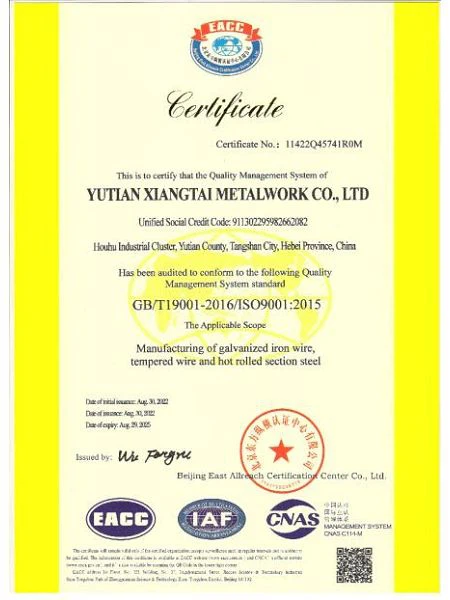
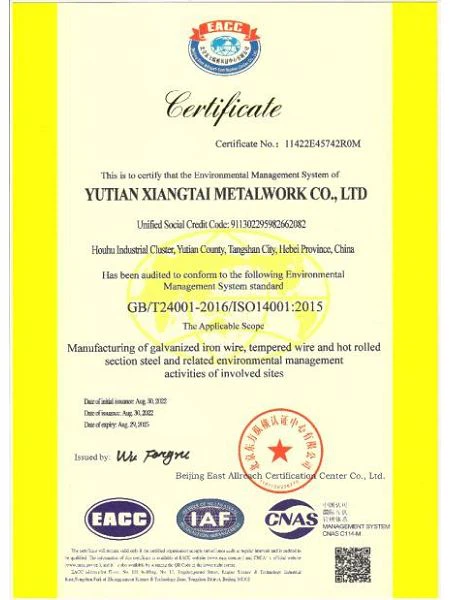
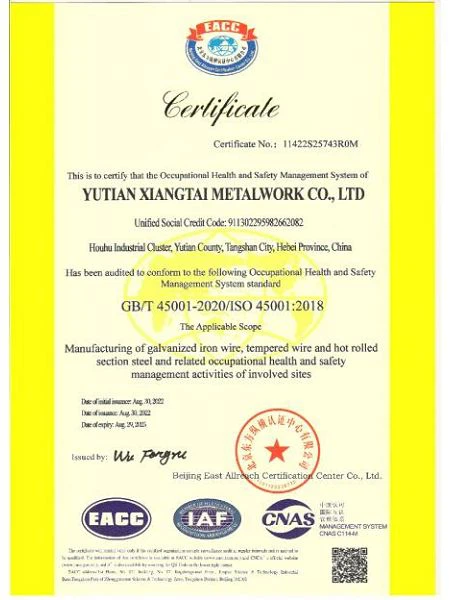
Yutian Xiangtai Metalwork Products Co Ltd. has 30 years of production experience. ls a product and sales as one of the comprehensive private enterprises, more than 800 employees, including professional technology and management more than 100 people. The company's business products are galvanized wire, common nails, cold drawn wire,annealed wire, Channel steel, i-steel, the annual output of 3 million tons over the years the company by the high quality products, reliable reputation, good service radiation sales to organizing more than 200cities across the country.


Our Certificate
FAQ
As one of the leading common nails manufacturers and suppliers in China, we warmly welcome you to wholesale high-grade common nails for sale here from our factory. All customized products are with high quality and competitive price.
Clavos, Black Annealed Wire, Annealed Wire Black