


Why Choose Us?
Quality products
We have advanced production and testing equipment, and our products meet various standards.
Rich experience
We have years of industry experience and a team of experienced engineers and technicians to ensure consistent precision and high quality of our products.
Reliable service
Our team is committed to providing reliable and consistent service, ensuring that you receive high-quality products and customer support from us every time.
Professional team
The company is in possession of numbers of senior engineers and has abundant technique power, well conditioned equipment and technology comes to perfection.

Head:Flated head, checkered head, round head
Other types:Common Nails,Roofing Nails,Concrete Nail,Drywall Screw,Coil Nails,U Nails,Framing Nails,Boat Nails
Payment term:30% TT in advance and 70% TT before shipment
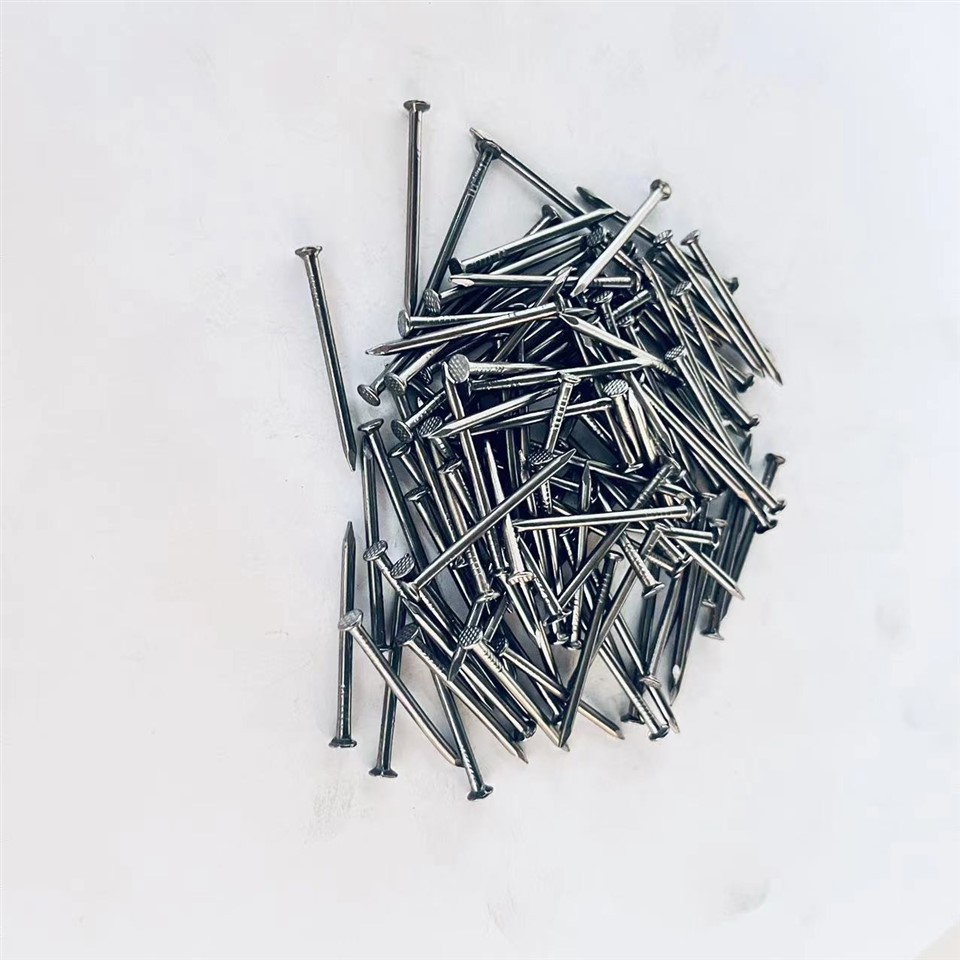
Material:Iron
Shank diameter:1.2mm-5.0mm
Length:16mm-160mm
Head:Flated head, checkered head, round head

Material:Iron
Shank diameter:1.2mm-5.0mm
Length:16mm-160mm
Head:Flated head, checkered head, round head

Shank diameter:1.2mm-5.0mm
Length:19mm-300mm
Length:16mm-160mm
Head:checkered head, round head


Other types:Common Nails,Roofing Nails,Concrete Nail,Drywall Screw,Coil Nails,U Nails,Framing Nails,Boat Nails
Payment term:30% TT in advance and 70% TT before shipment
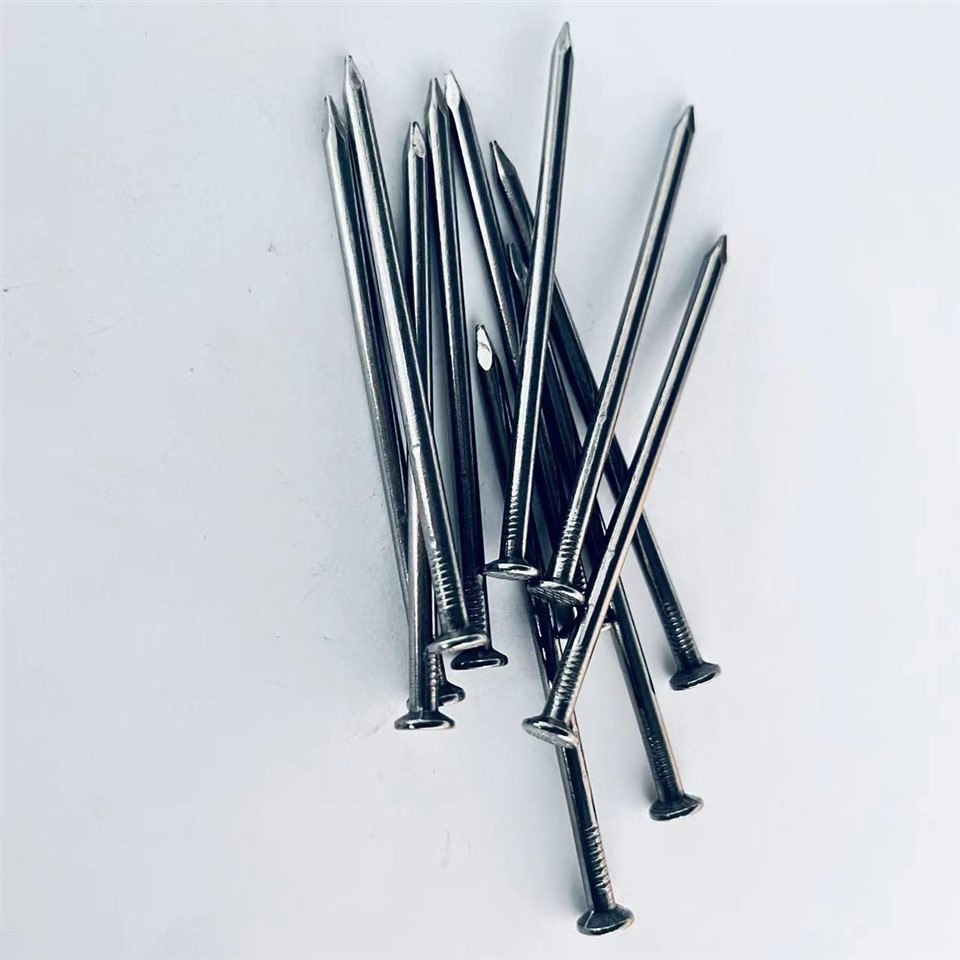

Other types:Common Nails,Roofing Nails,Concrete Nail,Drywall Screw,Coil Nails,U Nails,Framing Nails,Boat Nails
Payment term:30% TT in advance and 70% TT before shipment

Shank diameter:1.2mm-5.0mm
Length:16mm-160mm
Head:Flated head, checkered head, round head
What Are the Benefits of Common Wire Nails
Common wire nails have multiple benefits which include:
Common wire nails are stronger than box nails since they have greater diameter.
They are made of non-toxic material.
They are quite affordable.
This type of nail has quite a long lifespan.
What Are Common Wire nails Used For
Common wire nails are one of the most versatile and widely used fasteners in construction and woodworking projects. They are characterized by their smooth, round shank, diamond-shaped point, and flat head. Common wire nails are available in a variety of lengths and gauges to suit different applications.
Common uses of Common wire nails:
Framing: Common wire nails are the primary fastener used for rough framing, which is the structural skeleton of a building. They are used to connect studs, joists, plates, and other framing components.
Sheathing: Common wire nails are used to attach sheathing materials, such as plywood or oriented strand board (OSB), to the framing of walls and roofs. Sheathing provides structural support and weather protection for the building.
Trim and finish carpentry: Common wire nails are used to attach trim pieces, such as moldings, baseboards, and casings, to the framing and other surfaces.
Siding and paneling: Common wire nails are used to attach siding materials, such as vinyl siding or wood planks, to the exterior of a building. Siding provides weather protection and aesthetics to the exterior walls.
Fencing and gates: Common wire nails are used to attach fencing pickets, rails, and posts to each other and to the supporting structure. Fences provide privacy, security, and aesthetic appeal to a property.
Furniture making and woodworking: Common wire nails can be used for various woodworking projects, such as attaching furniture components, securing cabinet backs, and fastening wood pieces together.
General repairs and DIY projects: Common wire nails are a staple in any homeowner's toolbox for a variety of repair and DIY projects, such as fixing loose boards, hanging pictures, and securing objects to walls.
Packaging and crating: Common wire nails are used to secure wooden crates and boxes for shipping and transport. They provide strength and stability to the packaging.
Production Process of Common Wire Nails
The common wire nails manufacturing process includes wire drawing, molding, and cleaning. To create the curl, we need a unique round steel shape. Once you shape and secure the bottom and head, the nail will be complete. After polishing the coil, you will have a finished nail.
The operation in the nail manufacturing process as such:
Wire drawing:
The primary stage and its offset include shell stripping followed by descaling the wire. You can draw the coil to the diameter you want.
This metalworking process diminishes the cross-section of a wire. Wire drawing has numerous applications and isn't entitled to nail making alone. By being able to minimize wire cross-section by passing the wire through either a series of dies, this manufacturing procedure is an acquired concept.
Nail making:
The nails manufacturing machine and its auxiliary parts then make the necessary nail.
Nail polishing:
The nail-making machine punches the head to form a cap, your nail will require cleaning. It is a task destined for the nail cleaning machine. It blends nails in with sawdust simultaneously to help accomplish the necessary brightness. And the last measuring & packing.
Whether you are building a deck, cabinet, roof, or any other project, this blog post will help you find the right type of nail for the job.
Framing Nails
Framing nails are one of the most common types of construction nails used in wood frame construction. These nails are specifically designed for fastening lumber together, including wall framing, roof framing, and floor framing. These nails have a large head and a pointed tip, allowing them to penetrate wood easily and hold securely. Whether you are a professional contractor or a DIY enthusiast, framing nails are essential to any building project involving wood framing.
Box Nails
Another common type of construction nail is the box nail. They are used in many different types of construction, from framing to finishing. The box nails are called so because they come in a box, not a coil. They are used in heavy-duty work, like building frames, framing walls, and installing joists.
One thing to remember when using box nails is that they have a flat head. It means they may not have the same holding power as other nails with different head shapes. However, they still provide a good grip and are a great option for framing.
Sinker Nails
Sinker nails are designed for framing and construction work. They are specially designed with a flattened head that can be easily driven into the surface without splitting the wood or damaging it. These nails are most commonly used in building houses and commercial buildings.
The main feature distinguishing a sinker nail from other construction fasteners is its flattened head, which can be driven down into the wood. This feature helps prevent the nail from rising over time, which can happen with other types of nails.
Deck Nails
Deck nails are designed for outdoor construction and can withstand exposure to the elements. They are made from stainless steel or galvanized steel, which makes them resistant to rust and corrosion.
Deck nails come in various sizes and styles, including spiral, ring, and smooth shank. Ring shank deck nails are especially popular because they provide excellent holding power and prevent the deck boards from pulling up over time. So if you're planning to build a deck, make sure you use the right type of nails to ensure your project stands up to the elements.
Roofing Nails
Roofing nails are designed to secure shingles, felt paper, and roofing tiles to the roof deck. These nails are often coated with galvanized or stainless steel to prevent rust and corrosion. They also feature a larger head to provide more secure attachment and to prevent the roofing material from pulling through.
Roofing nails come in various lengths and sizes, depending on the type and thickness of the roofing material. They are often sold in large quantities, as roofing projects typically require a significant amount of nails. Choosing the right type and size of roofing nail is crucial to ensure the stability and durability of the roof.
Masonry Nails
Masonry nails are designed for brick, concrete, and other materials. These nails are made with hard and durable steel that allows them to be driven through tough materials without bending or breaking. In addition, masonry nails often have fluted shafts that provide extra grip and reduce the risk of the nail slipping out of the material.
Additionally, they may feature flat, chiseled, or diamond-shaped tips to help them penetrate through masonry. Due to their specific design and function, masonry nails are crucial in construction projects that require anchoring or fastening masonry materials.
Siding Nails
Siding nails are designed specifically for attaching siding materials to the exterior of a building. These nails are typically made of stainless steel or hot-dipped galvanized steel, which prevents them from corroding and damaging the siding over time. Siding nails are also coated with a special adhesive that helps to create a strong bond between the nail and the siding material, ensuring that the siding remains firmly in place even during extreme weather conditions.
The head of a siding nail is typically flat or slightly domed, which allows it to be easily countersunk into the siding material without leaving a visible hole or mark on the surface.
Brad Nails
Brad nails are a type of finishing nail that is smaller and thinner in diameter than traditional nails. They are used for delicate projects where a large and unsightly nail head would be detrimental to the overall appearance. Brad nails are often used for finishing and trimming work, such as attaching moldings or small decorative pieces. They are also commonly used in furniture-making and other crafts.
Flooring Nails
Flooring nails are specifically designed to securely fasten floorboards to the subfloor. These nails have a smaller head than other construction nails to avoid splitting the wood. They are typically made from hardened steel and come in various lengths and gauges. Choosing the right size of flooring nail is important to ensure the boards are properly fastened without causing any damage.
Flooring nails can also come with serrated edges or fluted shanks to provide a better grip and prevent the nails from backing out over time. Whether you are installing hardwood, laminate, or engineered flooring, using the appropriate nail is essential for a long-lasting and durable floor.
Duplex Nails
Duplex nails are double-headed nails designed for temporary use in construction projects. They are often used in framing, especially when the frame needs to be disassembled later. The double-headed design of the duplex nail allows for easy removal by pulling on the exposed head with a claw hammer.
They are available in various sizes to suit different needs, making them a versatile option for any project. However, it's worth noting that they are not intended for long-term structural use and should only be used temporarily.
What Are the Usage Value of Common Wire Nails
Common wire nails, as a crucial component of construction and woodworking, have been created to provide durable and reliable support for numerous applications. Common wire nails are commonly used in construction, carpentry, and many other applications that require a secure, sturdy connection.
Common wire nails are typically crafted from various types of steel. The most commonly used steel types are plain steel, stainless steel, and galvanized steel. Each of these steels has its unique characteristics that make them suitable for specific applications. Plain steel wire nails are the most common type of wire nails and are particularly beneficial for framing and general construction. Stainless steel wire nails are resistant to corrosion and rust, making them ideal for outdoor applications. Galvanized wire nails are also corrosion-resistant and have a much longer lifespan compared to plain steel wire nails.
Common wire nails are characterized by their pointed tips, flat head surface, and straight shanks. These features allow the nail to be easily hammered into wood, and the nail head sits flush with the surface, giving a neat finish without distortion. These wire nails also come in various lengths, diameters, and finishes, enabling versatility in the application process.
Common wire nails are incredibly versatile and can be utilized across various applications. They are an excellent solution for many applications, including woodworking, construction, and furniture making. Common wire nails can be used for paneling, baseboards, window trim, and many other structural applications. They are designed to withstand pressure and hold wood securely, making them an essential tool for any woodworker or builder. With a long lifespan, common wire nails can save the user money in the long run, making them an affordable and practical option.
Methods to Prevent Rusting of Common Wire Nails
Common wire nails play a significant role as vital components in construction and manufacturing, finding their utility across a diverse array of applications. To ensure these nails measure up to the standards of durability, functionality, and aesthetics, a variety of different coatings are applied. In this blog post, we'll overview the most popular and significant nail coatings, uncovering their roles in furnishing corrosion resistance, elevating aesthetics, and amplifying the overall performance of steel nails.
The methods employed to safeguard steel nails from corrosion are as diverse as the applications they serve. These coatings form a protective barrier between the nail and its surrounding environment, effectively preventing the onset of rust and granting the nails an extended lifespan. This is the list of coatings that are used to protect steel nails from corrosion.
Vinyl
This type of coating provides the smallest amount of corrosion protection, however, the primary purpose of the vinyl is to act as a lubricant during the installation of the nail. The protection from rust comes as a bonus feature. Usually, the vinyl coating is used in combination with electro-galvanized coating offering better corrosion resistance and holding power as a result.
Electro-galvanizing
Bright nails are submerged in an electrolyte solution and an electric current is used to deposit a layer of zinc onto the surface, providing some corrosion protection. After the process, the nails get a bright, shiny, electroplated zinc coating which is usually covered in a microscopic chromate coating.
Hot-Dip Galvanizing
These products undergo a process where nails are immersed in molten zinc, resulting in a robust coating that forms a strong bond with the steel through a metallurgical reaction. This zinc coating delivers a dual layer of protection, serving as both a barrier and a sacrificial coating. If the coating incurs damage, the zinc's sacrificial properties shield the underlying steel from harm. The only drawback of hot-dip galvanization is that the zinc layer is spread unevenly during the process, resulting in thinner layers on some nail parts which may be the weak points for corrosion.
Hot-dip galvanized nails find their optimal use in scenarios necessitating exceptional corrosion resistance, such as outdoor exposure or in tandem with pressure-treated wood (CCA and ACQ). Notably, within the realm of treated wood applications, hot-dip galvanized nails stand as the sole carbon steel fasteners recognized by building codes. However, the layer of zinc in hot-dip galvanized products is not enough when exposed to highly corrosive coastal environments. The only solution to this problem is to use certified stainless steel products.
Phosphate Coating
A delicate layer of zinc phosphate on the nail's surface yields a modest yet essential degree of corrosion protection. However, the main objective of this coating focuses primarily on increasing the nail's ability for pull-out resistance. This coating, meticulously applied, serves to fortify the nail's anchoring capabilities because of its uneven and rough surface. By enhancing the nail's pull-out resistance, the coating ensures that the nail remains securely in place even under significant stress or external forces. This not only increases the overall durability of the nail but also minimizes the risk of structural failures or accidents, making it suitable for both residential and industrial use.
All nails have three main parts:
A head
Which is hit with a hammer to drive the nail into a material and prevent the nail from completely passing through. There are several nail head types available:
● A round head provides good contact with the hammer but leaves a rough finish.
● A flat head is round and large to reduce the risk of it passing through the material.
● A chequered head has a raised pattern on the surface to provide grip and prevent the hammer from slipping.
● A countersunk or capped head is small, allowing the head to be sunk slightly below the material's surface so it's less visible.
● A clipped head is used in nail guns.
A shank
● Which rests through the pieces of material to securely hold them together. There are several shank types available:
● A smooth shank drives through materials easily but doesn't offer much resistance against being pulled out.
● A spiral shank has a spiral flute that rotates the nail as it's being driven to give a more secure grip in hardwoods.
● A ring (or annular) shank has rings that lock with wood fibres to provide a good grip in softwoods.
A point
● Which is the tip of the nail that first pierces the material as the nail is driven in. There are two types of nail points:
● A diamond-shaped point makes nails easier to drive. Long diamond-shaped points also prevent the risk of materials splitting.
● A blunt point makes the nail harder to drive but gives even better protection against splitting the material.
Our Factory
In 30 years, two factories and a large trading company were established.Yutian
Hongtai Wire Co., LTD., Yutian XiangtalMetalwork Co.LTD., and Tangshan Fengrun District Hengwei Trading Co., LTD The company in line with the "pragmatic, dedicated, harmonious, win-win, innovation,development" work philosophy; External adhering to the "based on quality, integrity management,customer service,benefit one party, give back to the society business purpose,has achieved great development,showing a momentum of development, become a leading enterprise at the county level/promoting the development of local economy
Yutian Xiangtai Metalwork Products Co Ltd. has 30 years of production experience. ls a product and sales as one of the comprehensive private enterprises, more than 800 employees, including professional technology and management more than 100 people. The company's business products are galvanized wire, common nails, cold drawn wire,annealed wire, Channel steel, i-steel, the annual output of 3 million tons over the years the company by the high quality products, reliable reputation, good service radiation sales to organizing more than 200cities across the country.


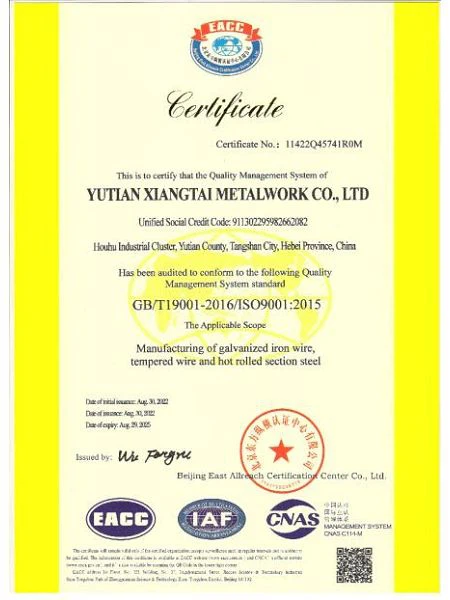
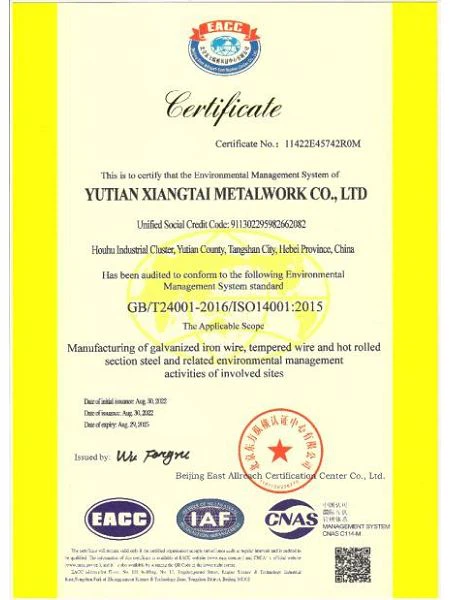
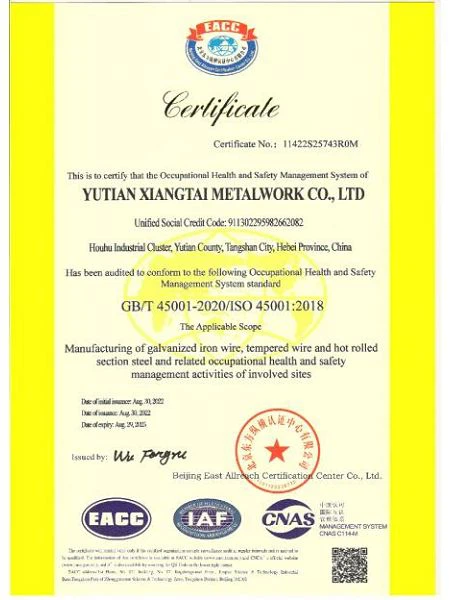
Our Certificate
FAQ
Hot Tags: common wire nail, China common wire nail manufacturers, suppliers, factory, Iron Nails, Q195 Annealed Wire, Annealed Wire, Common Wire Nail, Galvanized Wire 2 mm, 12 Gauge Annealed Wire


