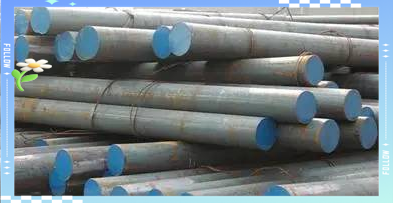
I. Threaded steel
Rebar, as the most widely used steel type in China at present, has longitudinal and transverse ribs on its surface, and is thus also called ribbed steel bar. This type of steel usually has two longitudinal ribs and transverse ribs evenly distributed along its length, providing important support for the construction field. Rebar can be classified into Grade I rebar (round steel), Grade II rebar (HRB235), Grade III rebar (HRB400), and Grade IV rebar (HRB500) based on its strength grade, providing diverse options to meet different engineering requirements.
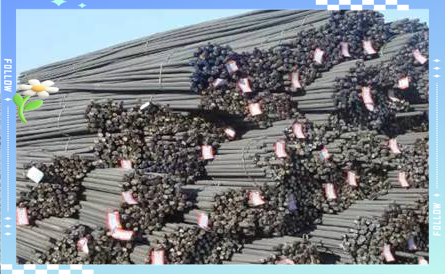
Due to the rib design of ribbed steel bars, their bonding capacity with concrete is significantly enhanced, thus enabling them to more effectively resist the effects of external forces. This type of steel plays a crucial role in civil engineering and is widely used in the construction of infrastructure such as houses, Bridges and roads, as well as in the construction of public facilities like expressways, railways, tunnels, flood control and DAMS. At present, steel mills such as Shagang and Hebei Iron and Steel are the leaders in the field of rebar production.
Ii. Wires
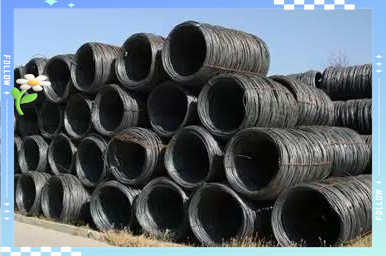
Wire rods, as hot-rolled round steel with diameters ranging from 5 to 22 millimeters, are also known as wire bars because they are often traded in the market in coil form. Among them, the wire specifications with diameters ranging from 5 to 13 millimeters are the most common. Wire rods have a wide range of applications. They can not only be directly used as reinforcing bars in construction but also be processed into various specialized steel wires, such as spring steel wires and communication wires. They can even be further processed into metal products like rivets and nails.
Iii. Hot-rolled Coil and Sheet
Hot-rolled coil is made from slabs (usually continuous casting slabs) as the starting material. After heating, it is refined into strip steel through roughing and finishing rolling mills. During the finishing rolling process, hot steel strips are output from the last rolling mill, cooled by laminar flow to the predetermined temperature, and then coiled into steel strip coils by the coiler. According to customer requirements, these cooled steel strip coils will go through a series of finishing production lines, such as leveling, straightening, cross-cutting or longitudinal cutting, inspection, weighing, packaging and marking, etc., and finally be processed into steel plates, leveled coils or longitudinally cut steel strips and other products. In short, a heated steel billet (presenting the red-hot appearance shown on TV) will go through several rolling processes, followed by trimming and straightening, and finally form a steel plate. This process is called hot rolling.
Iv. Cold-rolled sheet and coil
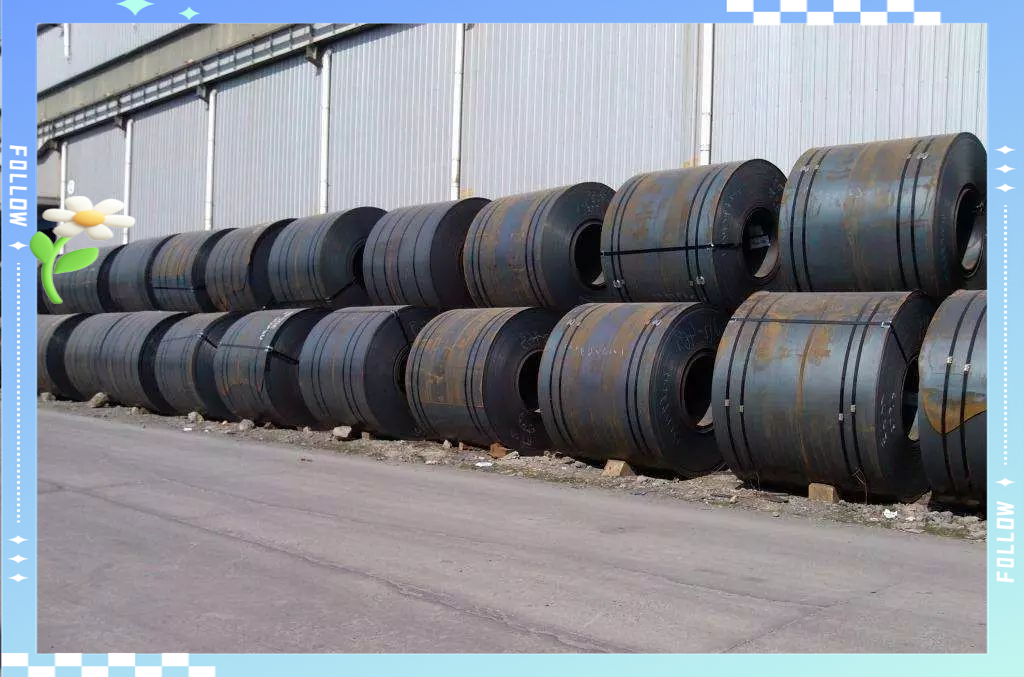
Starting from hot-rolled steel coils, the surface oxide scale is removed through the pickling process, and then continuous cold rolling is carried out. The final product is hard-rolled coil. During this process, due to the continuous cold deformation effect, the strength and hardness of the rolled hard coil will increase, while its toughness and plasticity will decrease accordingly, which in turn leads to the deterioration of its stamping performance. It is usually only suitable for the manufacturing of parts with simple deformation. It is worth noting that hard-rolled coils are often used as raw materials in hot-dip galvanizing plants, thanks to the annealing lines set up in the hot-dip galvanizing units. Its weight range is usually between 6 and 13.5 tons, and the hot-rolled pickled coil is continuously rolled at room temperature to obtain the required cold-rolled coil.
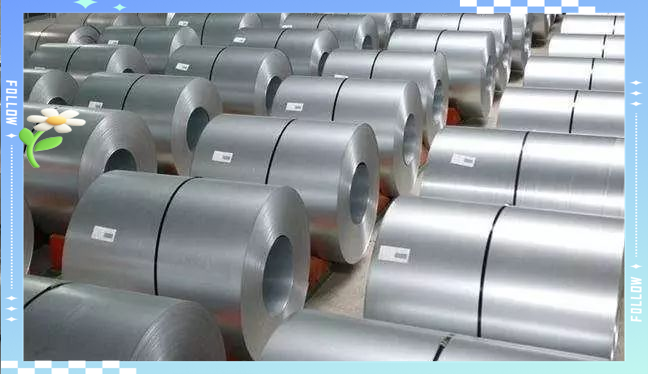
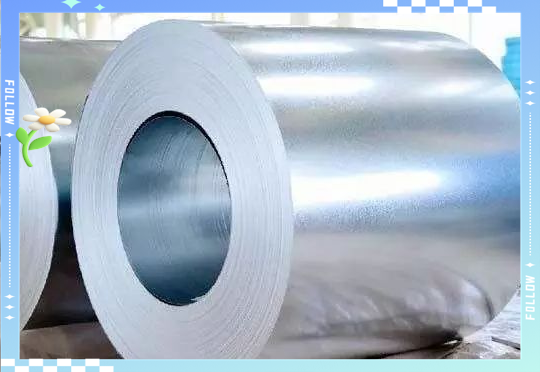
V. Galvanized coil
Galvanized coil is a thin steel plate made by immersing a thin steel plate in a molten zinc bath to coat its surface with a layer of zinc. At present, the continuous galvanizing process is the mainstream production method. In this process, coiled steel plates are continuously immersed in a galvanizing bath containing molten zinc to produce galvanized steel plates. In addition, there are alloyed galvanized steel sheets, which are also manufactured by the hot-dip method. However, after the steel sheets are taken out of the bath, they are immediately heated to approximately 500℃ to promote the formation of an alloy film between zinc and iron. This galvanized coil not only has excellent coating adhesion but also good weldability.
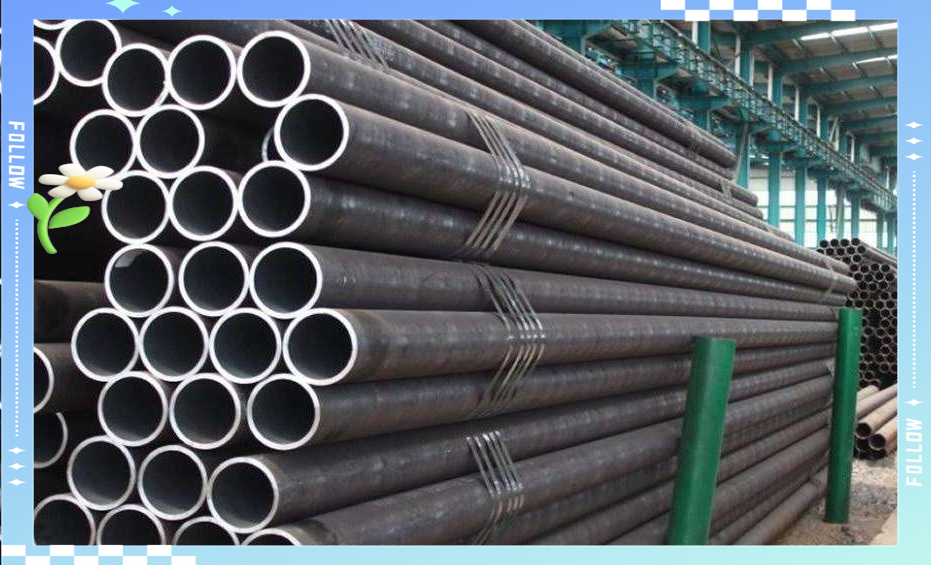
Vi. Seamless Steel Pipes
Seamless steel pipe is a kind of steel with a hollow cross-section and no seams around the periphery, which is circular, square or rectangular. It is precisely made through multiple processes such as piercing, hot rolling, cold rolling or cold drawing of steel ingots or solid tube billets. It has a wide range of applications, covering multiple fields such as pipelines for transporting liquids, oil drill pipes, automotive drive shafts, bicycle frames, and steel frames and hand frames in construction.
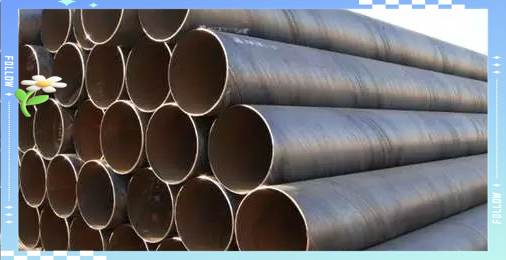
Vii. Spiral Steel Pipes
Spiral steel pipes are mainly made from steel strip coils. They are formed through high-temperature extrusion and then welded by automatic double-wire double-sided submerged arc welding process. Its application is extremely extensive. It can not only be used for liquid transportation, such as water supply and drainage, but also for gas transportation, such as gas, steam and liquid petroleum gas. In addition, in the field of construction, spiral steel pipes also play a significant role, such as in the construction of docks, roads and Bridges.
Viii. Galvanized Steel Pipes
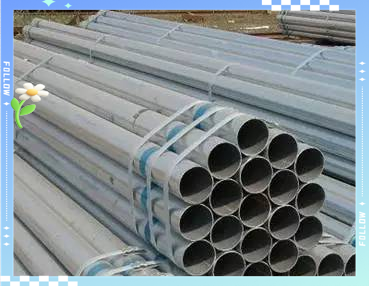
Galvanized steel pipes, with their surfaces covered by a layer of hot-dip or electroplated zinc, are designed to enhance their durability and corrosion resistance. This type of steel pipe is widely used in multiple fields, including construction, mechanical manufacturing, coal mining operations, chemical production, railway vehicle manufacturing, the automotive industry, as well as the construction of highways and Bridges.
Ix. Angle Steel
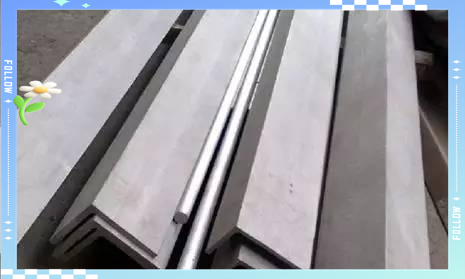
Angle steel, also known as Angle iron, is a long steel bar with its two sides intersecting perpendicularly at a 90-degree Angle. Angle steel can be classified into equal-sided Angle steel and unequal-sided Angle steel, among which the widths of both sides of equal-sided Angle steel are the same. Its specifications are usually expressed in millimeters by multiplying the side width by the side width and then by the side thickness. For example, "∠20×20×4" represents an equal-sided Angle steel with a side width of 20 millimeters and a side thickness of 4 millimeters.
Angle steel is widely used in the construction and engineering fields, such as the construction of beams, Bridges, transmission towers, as well as the manufacturing of lifting and transportation machinery, ships, industrial furnaces, reaction towers and container frames, etc.
X. Channel Steel
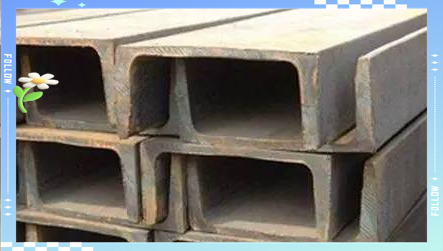
Channel steel, a long steel bar with a cross-section in the shape of a groove, is specifically indicated by the millimeters of its web height, leg width and web thickness. For instance, "100×50×8" represents a channel steel with a web height of 100 millimeters, a leg width of 50 millimeters and a web thickness of 8 millimeters. Channel steel plays a significant role in building structures, vehicle manufacturing, and other industrial fields, and is often used in conjunction with I-beams.
Eleven. I-beam
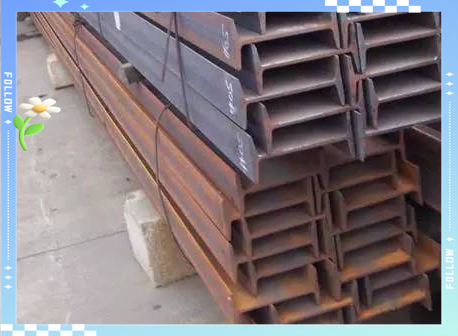
I-beam, also known as steel beam, has a cross-section in the shape of an "I" and is a type of long steel bar. The flange design of this type of steel is unique, gradually thinning from the root to the edge and maintaining a certain Angle. This enables I-beams to perform well under direct pressure and also to have good tensile strength. However, due to the relatively narrow flange in its cross-sectional dimensions, I-beams have certain limitations in terms of torsional resistance.
Eleven and twelve, H-shaped steel
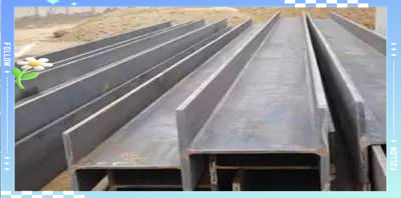
The flange part of the H-shaped steel maintains a uniform thickness and adopts a rolled section, which is formed by welding three plates together to create a composite section. Due to the fact that all its parts are arranged at right angles, H-shaped steel not only has strong bending resistance, but also is easy to construct, cost-effective, and relatively light in structural weight.
Twelve and three. Round steel
Round steel, as a solid long steel bar with a circular cross-section, its specifications are usually indicated by the diameter in millimeters. For example, "40" represents round steel with a diameter of 40 millimeters. This type of steel has extensive applications in multiple fields, covering industries such as hardware, construction, automotive manufacturing, shipbuilding, petrochemicals, mechanical manufacturing, medicine, food processing, power, energy, and aerospace.