

The key factors influencing the amount of zinc applied
Galvanizing process
Hot-dip galvanizing (hot-dip zinc coating) : Iron wire is immersed in molten zinc liquid, with a relatively thick zinc layer. The zinc coating weight is usually above 80g/㎡, which is suitable for high anti-corrosion requirements.
Electro-galvanizing (cold galvanizing) : It deposits a zinc layer through electrolysis, with a relatively low zinc coating weight (generally 40-80g/㎡), and is suitable for scenarios where anti-corrosion requirements are not high.
Surface condition of the iron wire
Oil stains and rust on the surface of iron wire can affect the adhesion of zinc coating. The more thorough the pretreatment (pickling, rust removal) is, the more uniform the zinc coating will be and the more stable the zinc coating amount will be.
Zinc bath temperature and zinc immersion time:
When hot-dip galvanizing, if the temperature of the zinc bath is too high or the immersion time is too long, it will cause the zinc coating to be too thick (excessive zinc coating amount), but the zinc coating may fall off. If the temperature is too low or the time is too short, the zinc coating amount will be insufficient.
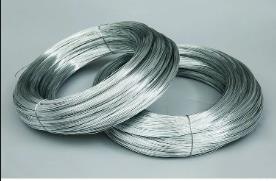
The principle for choosing the amount of zinc coating
Environmental corrosiveness: In highly corrosive environments such as humid, coastal, and industrial zones, a high zinc coating content (e.g., over 100g/㎡) is required. For dry indoor environments, a low zinc coating content (such as 40-60g/㎡) can be selected.
Cost balance: The higher the zinc coating amount, the higher the production cost (zinc material + process). The anti-corrosion performance and cost need to be balanced based on actual demand.
Industry standards: In some fields (such as construction binding wire and highway guardrails), there are mandatory zinc coating requirements, which must comply with relevant regulations.