



|
Product name |
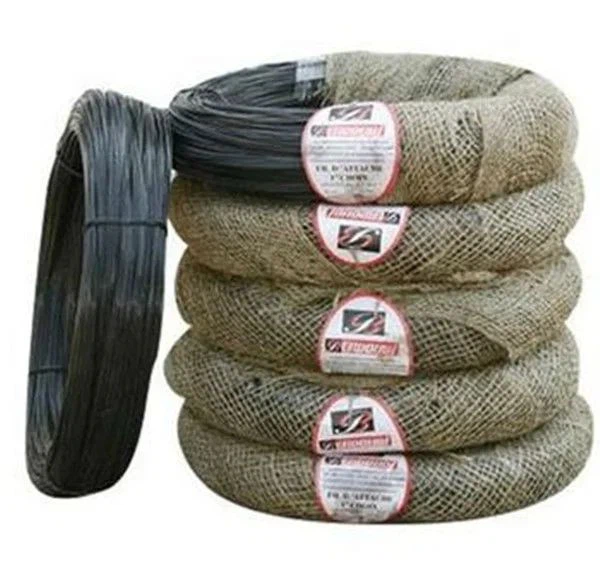
Black Annealed Iron Wire |
|
Size range |
BWG8-BWG22 |
|
Function |
Binding Wire |
|
Processing Service |
Decoiling |
|
Material |
Q195/Q235 |
|
Application |
Building Material |
|
Surface |
Annealed, rust-proof oil |
|
Color |
Black |
|
Packing |
Woven Bag, Hessian cloth, Pallet or Custom |
|
Tensile strength |
350-550N/mm2 |
|
Certificate |
ISO9001 |
|
Wire diameter |
0.7mm--6.0mm |
|
Coil weight |
1kg --- 500kg/coil |
|
Wire Gauge |
SWG(mm) |
BWG(mm) |
Metric(mm) |
|
8 |
4.05 |
4.19 |
4 |
|
9 |
3.66 |
3.76 |
4 |
|
10 |
3.25 |
3.4 |
3.5 |
|
11 |
2.95 |
3.05 |
3 |
|
12 |
2.64 |
2.77 |
2.8 |
|
13 |
2.34 |
2.41 |
2.5 |
|
14 |
2.03 |
2.11 |
2.2 |
|
15 |
1.83 |
1.83 |
1.8 |
|
16 |
1.63 |
1.65 |
1.6 |
|
17 |
1.42 |
1.47 |
1.4 |
|
18 |
1.22 |
1.25 |
1.2 |
|
19 |
1.02 |
1.07 |
1 |
|
20 |
0.91 |
0.84 |
0.9 |
|
21 |
0.81 |
0.81 |
0.8 |
|
22 |
0.71 |
0.71 |
0.7 |
Annealing Wire Production Process
Annealing wire is a type of soft wire with good plasticity and high precision, widely used in the electronics, electrical, and communication industries. The production process of annealing wire includes material selection, drawing, annealing, pickling, washing, drying, and other steps.
1. Material Selection
The material selection for annealing wire production is critical. High-quality raw materials should be selected, such as high-purity copper wires, which should be free of impurities and defects. The cross-sectional area, elongation, tensile strength, resistance, and other technical parameters should meet the standard requirements.
2. Drawing
After the raw materials are selected, the next step is to draw the wire. The process involves using a wire drawing machine, where the raw material is passed through a series of dies that progressively reduce the diameter and increase the length. The drawing process requires attention to technical parameters such as drawing speed, total reduction rate, and lubrication.
3. Annealing
Once the wires have been drawn to the desired size, the next step is annealing. Annealing refers to the process of heating the wire to a specific temperature and holding it at that temperature for a specified amount of time before cooling. This process helps to relieve stress and improve the ductility and conductivity of the wire. The temperature, time, and atmosphere during annealing must be carefully controlled to ensure quality.
4. Pickling
After annealing, the wire is pickled to remove any oxides or other contaminants on the surface. The pickling process involves immersing the wire in a solution of acid to dissolve any unwanted residue. This step is critical for ensuring good surface quality and corrosion resistance.
5. Washing and Drying
Once the wire is pickled, it is thoroughly washed to remove any remaining acid and other contaminants before being dried. The washing process typically involves soaking the wire in a water bath, while drying can be achieved using a combination of mechanical and thermal methods.
In conclusion, the production process of annealing wire is a complex and delicate process that requires careful attention to technical parameters, raw materials selection, and quality control. Through proper selection and control of the different steps involved in the process, manufacturers can produce high-quality annealing wire suitable for a wide range of applications in the electronics, electrical, and communications industries.



Hot Tags: 16 gauge black annealed wire, China 16 gauge black annealed wire manufacturers, suppliers, factory, Q195 Annealed Wire, 16 Gauge Black Annealed Wire, Annealed Wire Bwg 18, Hardware Nails, Galvanized Wire, Nails Common


