




Company Profile
Hongtai Wire Co., LTD., Yutian XiangtalMetalwork Co.LTD., and Tangshan Fengrun District Hengwei Trading Co., LTD In line with the working concept of "pragmatism, dedication, harmony, win-win, innovation and development"and the business purpose of"quality-oriented, honest management, customer service, benefiting one party and giving back to the society", LTD has made considerable progress and shown a good momentum of development.Become a county-level leading enterprise/promote local economic development
Why Choose Us
Advanced Equipment
Machines, tools, or instruments designed with advanced technology and functionality to perform highly specific tasks with greater accuracy, efficiency, and reliability.
Professional Team
Yutian Xiangtai Metalwork Products Co Ltd. With 30 years of production experience.It is a comprehensive private enterprise integrating production and sales, with more than 800 employees, including more than 100 professional technicians and managers.
Rich Experience
Over the years, the company has organized sales in more than 200 large and medium-sized cities with high-quality products, reliable reputation and good service.
Certificate
It has established solid contacts with more than 1000 distributors, and has been exported to Europe, Africa and the Middle East, and has received unanimous praise from foreign distributors.In order to promote the local economic development, we have been committed to the quality management system, and our products have passed the IS09001 inspection and certification smoothly.


The use of iron nails
1. "10 Unique Uses for Nails Beyond Just Hanging Pictures"
2. "The Versatility of Nails: From Construction to DIY Projects"
3. "Beyond Hammering: Surprising Uses for Nails in Everyday Life"
4. "Innovative Ways to Utilize Nails in Home Decor"
5. "The Essential Tool: How Nails Serve Multiple Purposes in Construction"
6. "Nail It: Creative Ways to Incorporate Nails in Arts and Crafts"
7. "From Roofing to Crafting: The Multifaceted Role of Nails in Society"
8. "Think Outside the Toolbox: Unconventional Uses for Nails in DIY Projects"
9. "The Power of a Tiny Object: How Nails Have Revolutionized Construction and Decoration"
10. "Beyond Functionality: How Nails Can Add a Unique Aesthetic to Your Space"
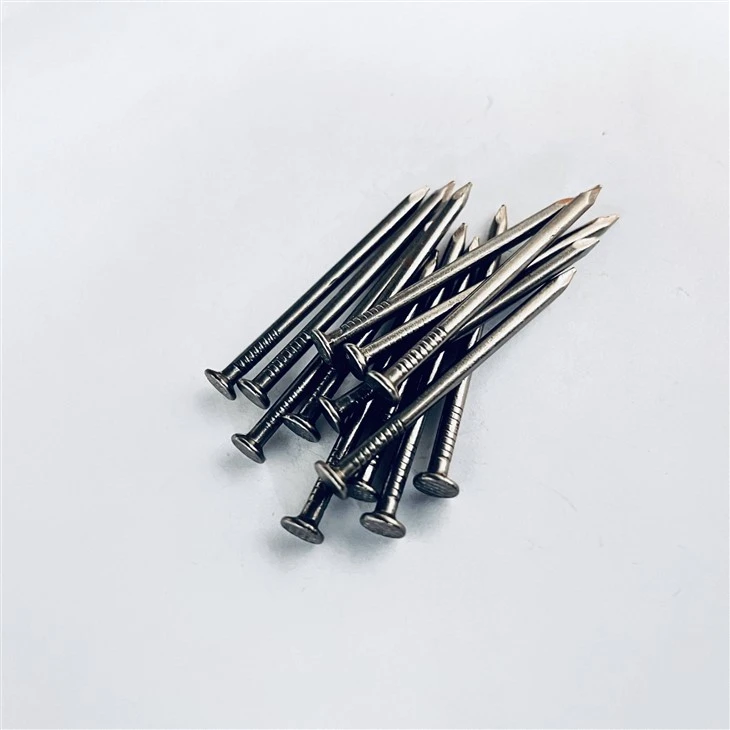
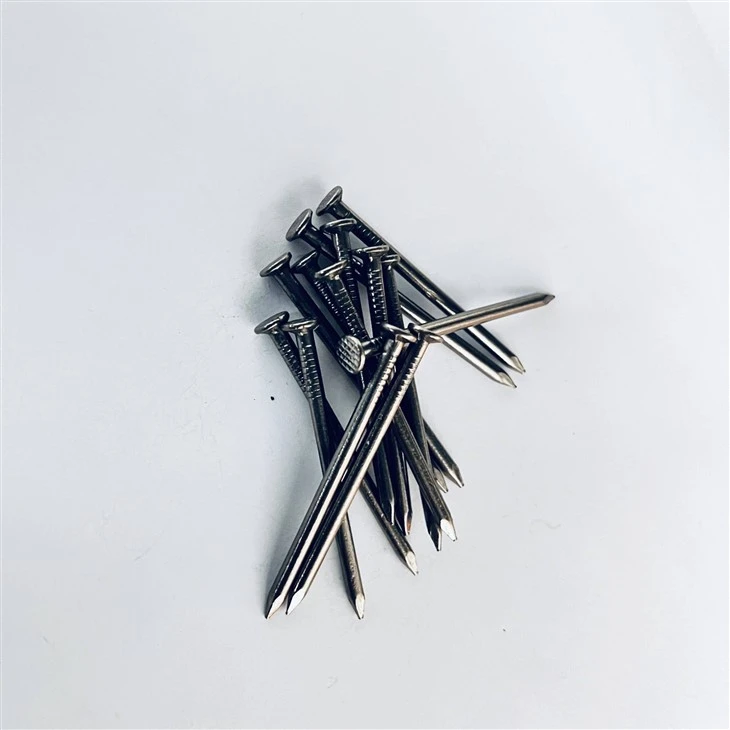
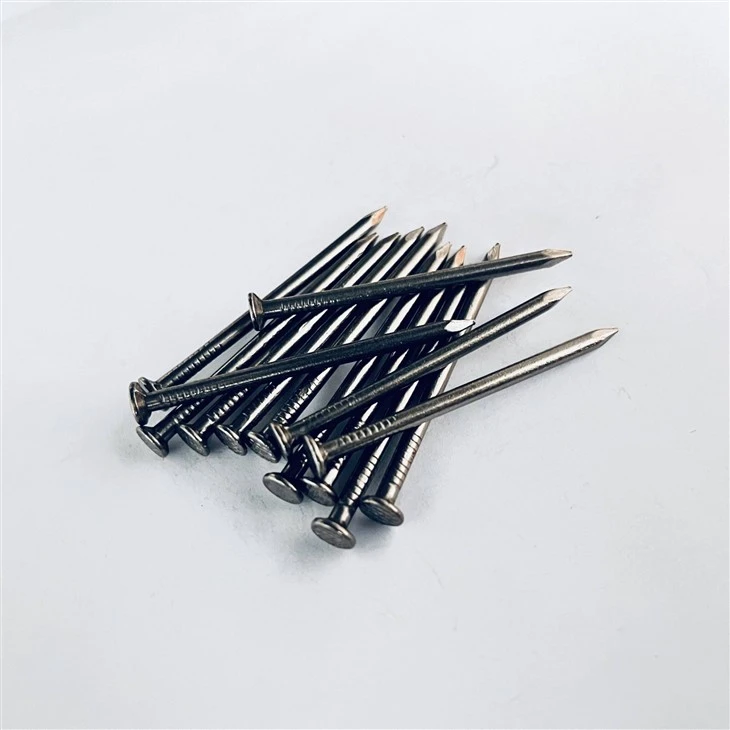
Advantages of Common wood Nails
Corrosion Resistance
The most significant distinction between the two types of nails lies in their corrosion resistance. Galvanised nails, thanks to their zinc coating, are highly resistant to rust and corrosion, making them an ideal choice for outdoor projects, such as fencing, decking, and siding. Bright round wire nails, being untreated, are more prone to rust and should be used primarily for indoor applications like furniture assembly and trim work.
Durability
Galvanised nails offer greater durability due to their protective coating. They are designed to withstand harsh weather conditions, temperature fluctuations, and exposure to chemicals better than bright round wire nails. On the other hand, bright round wire nails are suitable for lighter applications, where extreme durability may not be necessary.
Aesthetics
The appearance of the two nails differs significantly. Galvanised nails have a dull, matte finish due to their zinc coating, while bright round wire nails have a shiny, polished look. This difference may influence your choice depending on the visibility of the nails in the project.
Secure Hold
The larger, rounded head design of these nails provides a secure hold when suspending items. This helps prevent shifting or falling, ensuring that the hung objects remain in place.
Easy Installation
Round head hanging nails are easy to install. Their pointed tips allow for quick insertion into walls or other surfaces without the need for pre-drilling. This saves time and effort during the installation process.
Versatility
These nails are versatile and can be used for a wide range of hanging applications. Whether it's hanging picture frames, shelves, decorations, or organizing accessories, round head hanging nails provide a reliable solution
Clipped Head And Round Head Nailers a Difference Between The Two
The big difference between clipped head and round head nailers is that a clipped head nailer can hold about 20-30% more nails in the same magazine size than a round head nailer.
This is due to the way that the nails are strung together, or 'collated'. When clipped head nails are collated, the flat ends of the heads butt right up next to each other, drastically decreasing the space between two nails, and thus increasing the amount of nails you can fit into the nailing gun's magazine.
Round head nails take up more space than clipped head, because the heads do not line up flush with one another when they're collated - you have a full head's width between each nail.
Being that clipped heads can pack together more tightly, the magazine on clipped head nailers is typically shorter than those of round head nailers. This is a big perk to some users, as it allows for a little less weight and more maneuverability in tight or hard to reach spaces.
On the contrary, round head nailers have a longer, heavier magazine, which some other users feel is an advantage as it provides more balance to the gun.

Indoor Applications: Bright round wire nails are ideal for indoor projects, such as furniture assembly, cabinetry, and trim work, where exposure to moisture is minimal.
Decorative Projects: When the appearance of the nail is important, such as in crafts or decorative woodwork, the bright and shiny finish of these nails can add a pleasing aesthetic touch.
Construction: Round wire nails are versatile and suitable for various construction tasks.
Timber Framing: They are commonly used for roof rafters, floor joists, wall partitions, and stud work.
Fencing: Round wire nails are also ideal for heavy-duty fencing projects.
Grip better than Round Wire Nails for a bunch of reasons


When you bang in a nail you push the fibers of wood down. After nailing, in order for the nail to pop out the nail has to overcome the force of thousands of wood fibers acting like little barbs that grip the nail. Round Wire Nails are round and only taper at the tip, so the wood fibers along the shaft of the nail are only bent a little. With cut nails, which are tapered throughout their length, the taper increases as the nail goes deeper so more and more wood is bent away with increasing force resisting pullout.
More wedging action all around also mean more forces that can split the wood. When you hammer in a wire nail the pointed tip wedges the wood in all directions. A large wire nail will have more force holding it in than a small wire nail, but also more force trying to split the wood. Cut nails are only tapered in one dimension and when installed properly with the wedge parallel to the grain of the wood, the taper of the nail is with the grain so it doesn't force a split, and the parallel sides of the nail won't cause a wedging action that would split the wood. So, for a given size and length of nail you get a lot lot more holding power with a cut nail.
Why Cut Nails Are Better 53 - The wedging action of a wire nail is fixed by the diameter of the point. Far more wedging action can be achieved in the continuous increasing taper of a cut nail. Some cut nails (boat nails) have a wider section in the middle so that the wood at the top of the nail can swell back around the nail for even more strength.
The square section of a cut nail resists attempts at twisting the wood which is easy to do with a round wire nail. This reduced movement helps keep the nailed structure stable.
A cut tail is tapered top to bottom so that the top piece being nailed down is held down by the taper of the nail and you don't need much of a nail head. This allows for a much smaller nail head that is easily set flush with the wood. With a wire nail, with less gripping force, the head is an important part of keeping the joint from separating with a more visible result.
While not related to holding power the tops of cut brads are smooth and don't deflect away from the hammer blow as much as the pinched top of a wire brad. So the cut nail is more reliably easily nailed in.
Yutian Xiangtai Metalwork Co.,Ltd, established on 2012, is a compreshensive private enterprise intergrating the production and sales of metal products. Which has fixed assets of 500 million yuan and 860 employees.


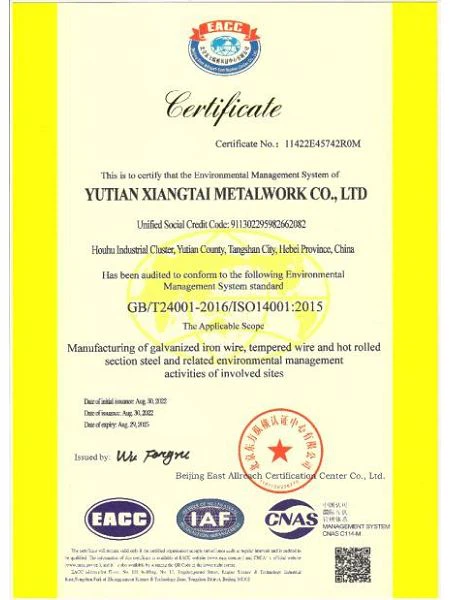
Our Certificate


FAQ
Hot Tags: nail wire, China nail wire manufacturers, suppliers, factory, 4mm Black Annealed Wire, 12 Gauge Galvanized Wire, 16 Gauge Galvanized Wire, Annealed Wire Bwg 18, 12 Gauge Annealed Wire, Nails Common


