


Company Profile
Hongtai Wire Co., LTD., Yutian XiangtalMetalwork Co.LTD., and Tangshan Fengrun District Hengwei Trading Co., LTD The company in line with the "pragmatic, dedicated, harmonious, win-win, innovation,development" work philosophy; External adhering to the "based on quality, integrity management,customer service,benefit one party, give back to the society business purpose,has achieved great development,showing a momentum of development, become a leading enterprise at the county level/promoting the development of local economy
Why Choose Us
Advanced Equipment
A machine, tool or instrument designed with advanced technology and functionality to perform highly specific tasks with greater precision, efficiency and reliability.
Professional Team
Yutian Xiangtai Metalwork Products Co Ltd. has 30 years of production experience. ls a product and sales as one of the comprehensive private enterprises, more than 800 employees, including professional technology and management more than 100 people.
Rich Experience
The years the company by the high quality products, reliable reputation, good service radiation sales to organizing more than 200cities across the country.
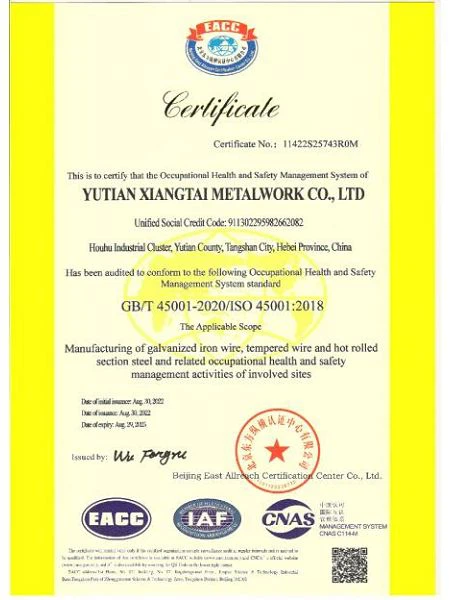
Certificate
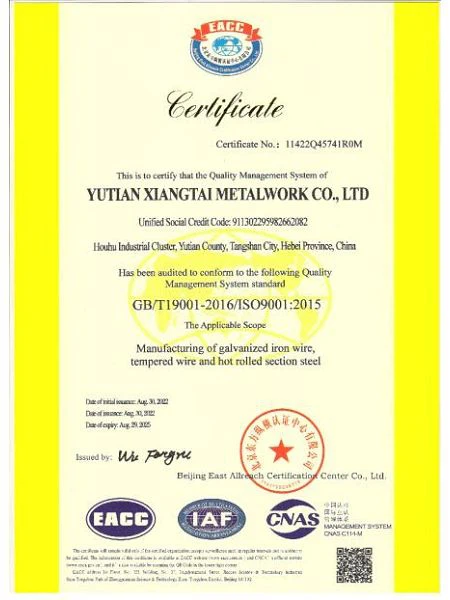
The establishment of a solid contact with more than 1000 dealers and are exported to Europe, Africa, Middle East countries, by foreign dealer's consistent high praise. promote the local economic development We have been concentrated on quality management systemand our products have successfully passed the inspection and approval of IS09001

●Common nails are made of Q195 or Q235 carbon steel.
●Ordinary nails are suitable for soft and hardware, bamboo, plastic, wall casting, furniture maintenance, packaging, etc.
● It is widely used in Building construction, decoration field, bicycle parts, wooden furniture, electrical component, household and so on.
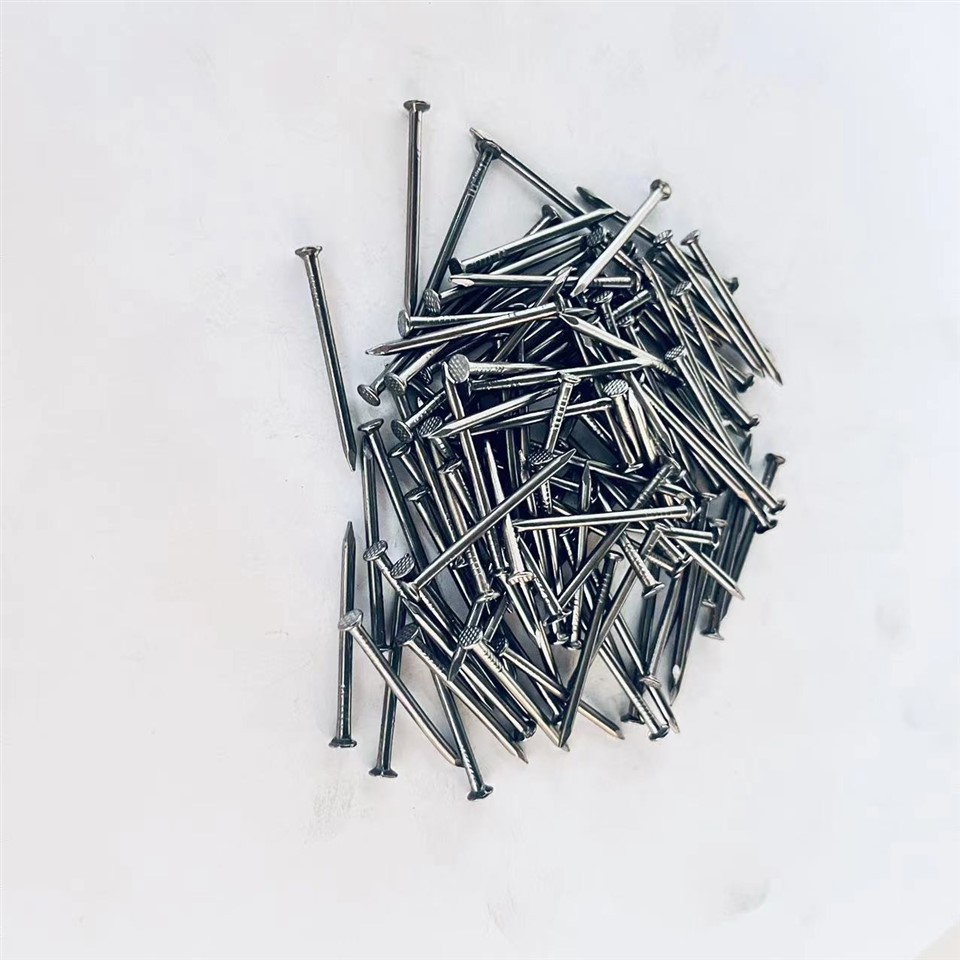
● It is widely used in Building construction, decoration field, bicycle parts, wooden furniture, electrical component, household and so on.
● Complete in specifications Refined aesthetic appearanceSafe and durable, reliable quality.

The production process of iron nails begins with the selection and preparation of raw materials. Steel wire or iron bars are typically used to create the nail's shaft, while the head is formed separately from a piece of steel or iron rod.

● Common nails are made of Q195 or Q235 carbon steel.
● The common nails is suitable for hard and soft wood, bamboo pieces,or plastic, wall foundry, repairing Furniture, packaging etc.
●Widely used in construction, decoration, bicycle accessories, wooden furniture, electrical components, home and so on.

● Complete in specifications Refined aesthetic appearanceSafe and durable, reliable quality.
● The company has 100 nail-making machines, including 15 high-speed nail-making machines. The daily output of common nails is 800 tons and the monthly output is 5000 tons.

Our nails are made of high-quality carbon steel, making them strong and durable. They are suitable for a variety of applications in construction, decoration, furniture repairs, and more. We offer a range of packaging options to suit your needs, and our products have been trusted by customers around the world.

Our nails are made of Q195 or Q235 high-quality carbon steel, making them durable and reliable for a variety of applications. Our range includes normal nails that can be used on hard and softwood, bamboo, plastic, wall casting, repairing furniture, packaging, and more.

Our nails are made of high-quality carbon steel, making them strong and durable. They are suitable for a variety of applications in construction, decoration, furniture repairs, and more. We offer a range of packaging options to suit your needs, and our products have been trusted by customers around the world.
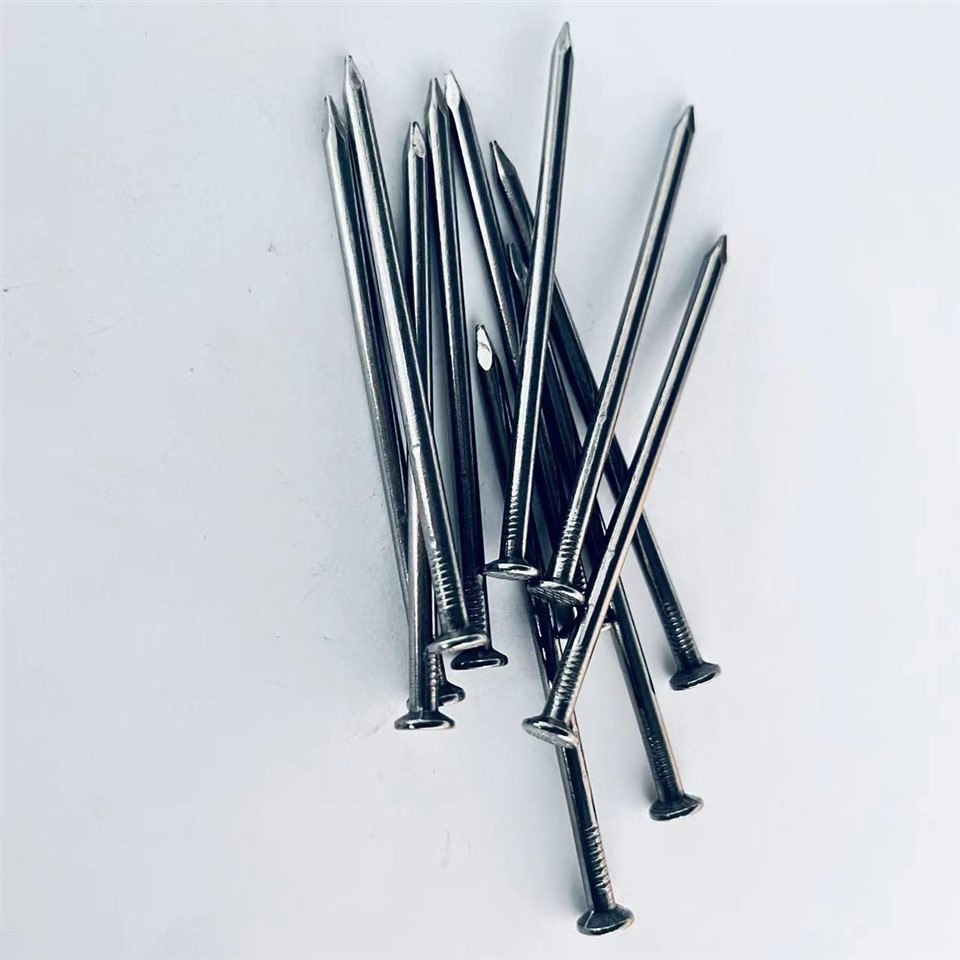
What is Construction Nails
In The World Of Construction, Nails Are Essential Components Used To Connect Materials Together.
A Nail Is A Small, Slender, And Pointed Metal Fastener Primarily Used To Join Or Secure Various Building Materials.
Common Types Of Nails In Construction Include Common Nails, Finishing Nails, Roofing Nails, And Concrete Nails.
Nails and screws are the two most common types of fasteners. The presence of exterior threading allows screws to create a stronger and more secure hold when joining two or more objects. Even with their increased security, though, nails are the preferred fastener in the construction industry.
Benefits of Construction Nails
Less Expensive
For starters, nails are less expensive than screws. While the number varies, it's not uncommon for two-story residential homes to contain over 10,000 nails. Screws cost significantly more than mails, however. As a result, construction companies can save money by using nails. This is just one of several reasons why nails are the preferred fastener in the construction industry.
Increased Strength
Screws are, in fact, able to create a more secure hold when joining objects than nails because they have a threaded shaft. With that said, nails offer greater tensile strength. Screws are more brittle than nails. The exterior threading results in areas of thin metal that can easily break when exposed to stress or pressure. Nails don't have a threaded shaft, so they aren't as brittle as screws. And in turn, they offer greater tensile strength, making them desirable for construction and carpentry applications.
Easier to Install
Another reason nails are the preferred fastener in the construction industry is because they are easier to install. There are power tools available that can quickly and efficiently install both nails and screws. Nails, however, typically require less time to install. With the exception of self-tapping screws, most screws require the use of a pilot hole. Before a construction or carpentry worker installs a screw, he or she must first drill a pilot hole. Nails don't require a pilot hole and, instead, can be driven directly into the respective objects.
Easier to Remove
Not only are they easier to install than screws, but nails are also easier to remove. If a building component needs replacing, a worker can easily remove a nail using a hammer or similar tool. To remove a screw, construction and carpentry workers must use a screwdriver, which generally requires more time and energy.
Types of Construction Nails
Drywall Nails
Drywall nails are designed with little rings around the shaft to make them more sturdy and less likely to slip. They are used for gypsum boards and attaching drywall. Many people also choose to use drywall screws, which are similar to drywall nails.
An isolated flooring nail shot against a clean white background, perfect for use in flooring installation and renovation projects.
Flooring Nails
Flooring nails come in a wide variety of designs depending on the material of flooring that is intended to be attached. Some kinds of flooring nails have rings similar to screws for attaching plywood or other subfloors. The rings reduce slippage and ensure that any material is very securely attached.
A framing nail shot on a white background, ideal for use in construction and woodworking projects.
Framing Nails
Typically the same as common nails, framing nails are a sturdy and long nail used for framing buildings or any other woodworking project that requires a solid framework. Some framing nails are slightly thinner and more subtle than common nails, making them easier to drive in and to keep flush or even sunk for aesthetic reasons.
Roofing Nails
Roofing nails are designed and named for their main function. Because of their larger heads and shorter shanks, roofing nails are typically used for attaching shingles, asphalt, and other roofing material. They can also be used to attach house wrap, roof felt, and sheathing. The thin roof material is held in place by the large head, making sure it doesn't blow away or get torn. Sometimes these nails are even slightly twisted to increase holding power. Because these nails are constantly exposed to the elements, they are also usually galvanized to prevent rusting and corrosion.
Duplex Nails
Also known as double-headed nails, this kind of nail is designed for use for temporary structures such as scaffolding. This nail has two heads, one above the other, so that when driven into a material, the upper head still remains accessible for easy removal once the construction project is complete.
A sturdy and reliable masonry nail shot on a clean white background, designed for use in masonry and concrete projects.
Masonry Nails
These super-solid and hard masonry nails are typically made of super-tough materials, like steel, that allow them to be driven into masonry surfaces such as concrete and brick. This heavy-duty nail is often used to attach wood to stone or brick.
Material of Construction Nails
Nails come in a wide variety of materials, each with its own unique properties and uses. Here are some of the most common materials used in construction nails:


Steel: Steel nails are the most common type of nail and are known for their strength and durability. They come in a variety of sizes and shapes and can be used for a wide range of projects.
Galvanized Steel: Galvanized steel nails are made of steel that has been coated in zinc. This makes them corrosion resistant and ideal for use in outdoor projects or in areas with high moisture.
Aluminum: Aluminum nails are lightweight and don't rust, making them a popular choice for siding and other projects where they will be exposed to the elements.
Copper: Copper nails are known for their beauty and are often used in decorative applications. They are also resistant to corrosion and ideal for use in seaside and coastal areas.
Stainless Steel: Stainless steel nails are extremely strong and are resistant to corrosion. This makes them ideal for use in areas with high humidity or salt water, such as boats or docks.
Application of Construction Nails
Nails are a popular selection for roofing, siding and sheathing projects. The amount of fasteners that are needed in these projects makes nails a more attractive choice because they offer a lower price point.
Screws provide stronger holding power and work well for decking projects. Upgrades in fastener technology have made it even easier to install decking screws, and hidden fastener applications help to further improve the look of your deck.
For jobs like molding or baseboard installations, nails are often used for their price and user-friendly applications. They're also a bit more discreet in these applications and won't show up as much as a screw might in more delicate trim pieces.
Screws are often chosen for subfloor installations because their joining strength helps to prevent squeaky floors. Nails are more flexible and will give a little more with hardwood flooring, so they're often the choice for panel installation. Because the wood expands and contracts as a reaction to moisture, nails provide a more flexible fastening job.
Screws provide a stronger joint and work well in cabinetry, furniture and similar woodworking projects.
Nails have long been chosen for bigger projects, like framing, because of their cost. They're popular for framing jobs because they're quick to install and save upfront on price tags. But there have been advancements in screw technology over the last few years, and some manufacturers have created pneumatic drivers for screws to help with your framing job.
Wire Drawing
The process begins with drawing metal rods through progressively smaller dies to create a long, thin wire of the desired diameter.
Finishing
Nails may undergo additional finishing processes, such as coating or galvanizing, to enhance their corrosion resistance or improve their appearance.
Nail Cutting
The wire is then cut into predetermined lengths, corresponding to the desired nail size.
Pointing
One end of the cut wire is sharpened to form the nail's point, either through grinding or a series of mechanical operations.
Heading
The opposite end of the wire is flattened or shaped to form the nail's head, providing a surface for hammering.
Nails are among the most common building materials in today's construction industry. While nails may seem small and insignificant, they have several environmental impacts that we should not overlook. Here are some notable environmental impacts of construction nails:
Materials: Nails are typically made of steel or aluminum, both of which are non-renewable resources. The mining, extraction, and transportation of these materials have significant environmental impacts, including deforestation, soil erosion, and greenhouse gas emissions.
Manufacturing: The manufacturing process of nails requires energy, which often comes from non-renewable resources, such as coal, gas, or oil. This energy consumption releases large amounts of carbon dioxide and other harmful pollutants into the atmosphere.
Disposal: When nails are no longer useful, they end up in landfills, where they can take decades, if not centuries to break down. As they break down, they release hazardous chemicals that can harm both the environment and human health.
Hongtai Wire Co., LTD., Yutian XiangtalMetalwork Co.LTD., and Tangshan Fengrun District Hengwei Trading Co., LTD The company in line with the "pragmatic, dedicated, harmonious, win-win, innovation,development" work philosophy


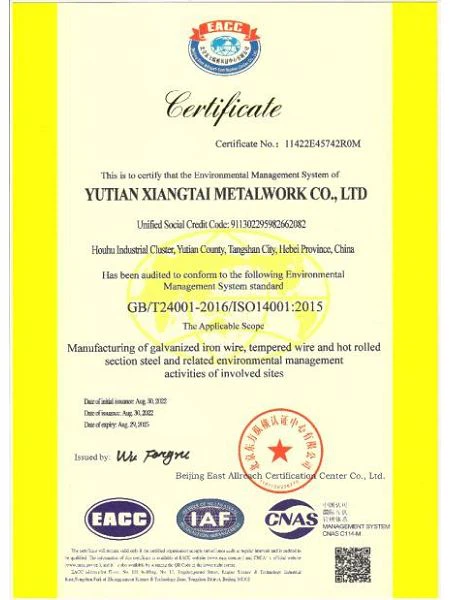
Our Certificate
FAQ
Hot Tags: hardware nails, China hardware nails manufacturers, suppliers, factory, Nails Common, 12 Gauge Galvanized Wire, Annealed Wire Black, Galvanized Wire 12, Binding Galvanized Wire, 16 Gauge Galvanized Wire


