

Company Profile
Hongtai Wire Co., LTD., Yutian XiangtalMetalwork Co.LTD., and Tangshan Fengrun District Hengwei Trading Co., LTD The company in line with the "pragmatic, dedicated, harmonious, win-win, innovation,development" work philosophy; External adhering to the "based on quality, integrity management,customer service,benefit one party, give back to the society business purpose,has achieved great development,showing a momentum of development, become a leading enterprise at the county level/promoting the development of local economy
Why Choose Us
Advanced Equipment
A machine, tool or instrument designed with advanced technology and functionality to perform highly specific tasks with greater precision, efficiency and reliability.
Professional Team
Yutian Xiangtai Metalwork Products Co Ltd. has 30 years of production experience. ls a product and sales as one of the comprehensive private enterprises, more than 800 employees, including professional technology and management more than 100 people.
Rich Experience
The years the company by the high quality products, reliable reputation, good service radiation sales to organizing more than 200cities across the country.
Certificate
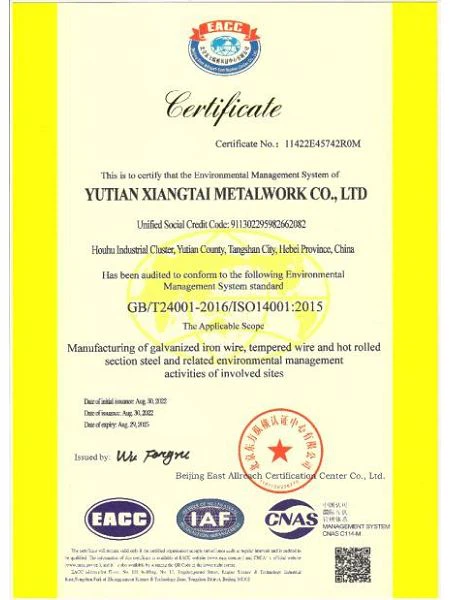
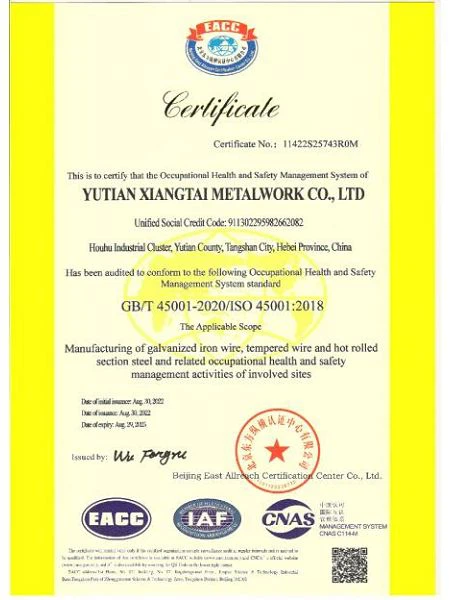
The establishment of a solid contact with more than 1000 dealers and are exported to Europe, Africa, Middle East countries, by foreign dealer's consistent high praise. promote the local economic development We have been concentrated on quality management systemand our products have successfully passed the inspection and approval of IS09001

●Common nails are made of Q195 or Q235 carbon steel.
●Ordinary nails are suitable for soft and hardware, bamboo, plastic, wall casting, furniture maintenance, packaging, etc.
● It is widely used in Building construction, decoration field, bicycle parts, wooden furniture, electrical component, household and so on.
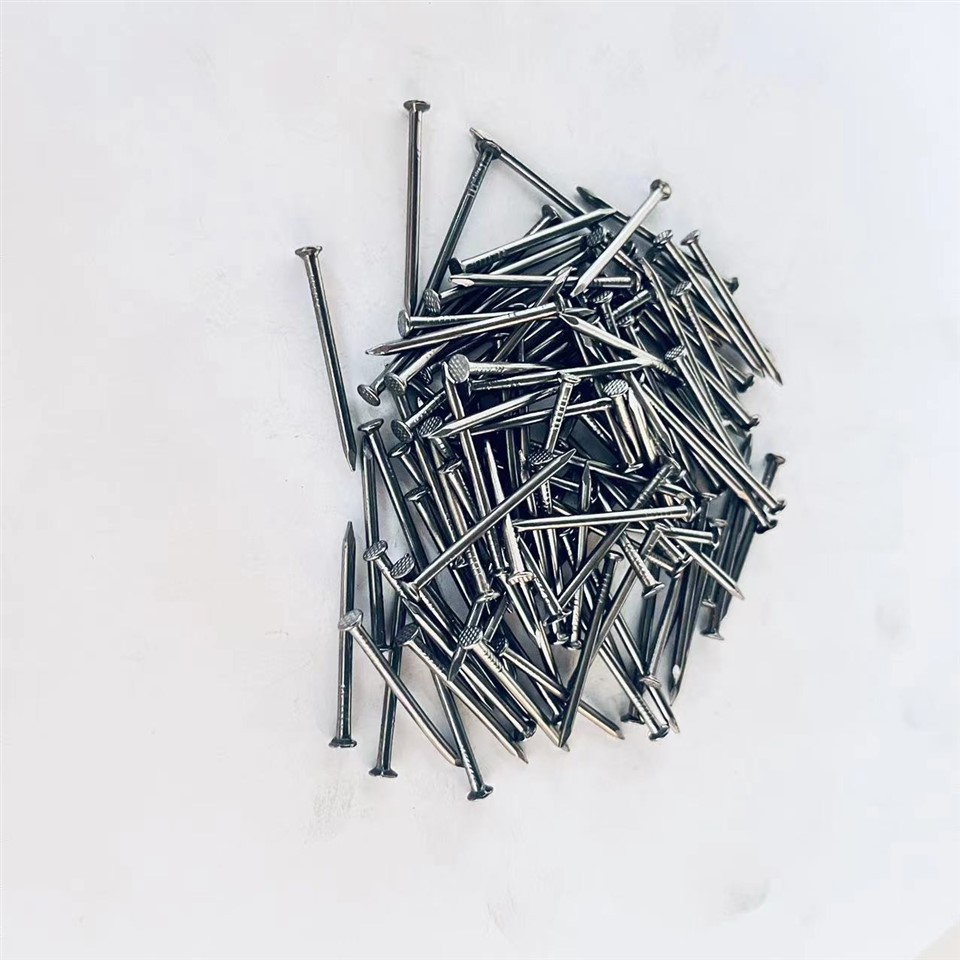
● It is widely used in Building construction, decoration field, bicycle parts, wooden furniture, electrical component, household and so on.
● Complete in specifications Refined aesthetic appearanceSafe and durable, reliable quality.

The production process of iron nails begins with the selection and preparation of raw materials. Steel wire or iron bars are typically used to create the nail's shaft, while the head is formed separately from a piece of steel or iron rod.

● Common nails are made of Q195 or Q235 carbon steel.
● The common nails is suitable for hard and soft wood, bamboo pieces,or plastic, wall foundry, repairing Furniture, packaging etc.
●Widely used in construction, decoration, bicycle accessories, wooden furniture, electrical components, home and so on.

● Complete in specifications Refined aesthetic appearanceSafe and durable, reliable quality.
● The company has 100 nail-making machines, including 15 high-speed nail-making machines. The daily output of common nails is 800 tons and the monthly output is 5000 tons.

Our nails are made of high-quality carbon steel, making them strong and durable. They are suitable for a variety of applications in construction, decoration, furniture repairs, and more. We offer a range of packaging options to suit your needs, and our products have been trusted by customers around the world.

Our nails are made of Q195 or Q235 high-quality carbon steel, making them durable and reliable for a variety of applications. Our range includes normal nails that can be used on hard and softwood, bamboo, plastic, wall casting, repairing furniture, packaging, and more.
Our nails are made of high-quality carbon steel, making them strong and durable. They are suitable for a variety of applications in construction, decoration, furniture repairs, and more. We offer a range of packaging options to suit your needs, and our products have been trusted by customers around the world.

Shank diameter:1.2mm-5.0mm
Length:16mm-160mm
Head:Flated head, checkered head, round head
What is Common Wire Nail
Common wire nails, often referred to simply as common nails, are a staple in the world of construction and woodworking. These unassuming pieces of hardware play a crucial role in joining, fastening, and securing various materials. They are a versatile and essential component in the toolbox of builders, carpenters, and DIY enthusiasts alike.
Common wire nails are typically constructed from steel and have a simple yet effective design. They consist of a cylindrical shaft with a pointed tip on one end and a flat head on the other. The head is usually round or sometimes countersunk to sit flush with the surface of the material being fastened. These nails are available in a variety of lengths and gauges to accommodate different applications.
Strength and Durability
Common wire nails are known for their remarkable strength compared to box nails. Their greater diameter allows them to withstand heavier loads, making them an ideal choice for a wide range of applications. Whether you're constructing a wooden structure or securing materials, these nails offer superior holding power. Their robust design ensures enhanced resistance against bending or breaking, even in high-stress situations. As a result, common wire nails deliver a reliable and long-lasting solution for your construction needs.
Non-Toxic Composition
An important consideration in any construction project is the materials used. Common wire nails are manufactured using non-toxic materials, ensuring they do not release harmful substances into the surrounding environment. This eco-friendly aspect not only promotes healthier living spaces but also protects the integrity of the surrounding ecosystem. By choosing common wire nails, you can contribute to sustainable building practices without compromising on strength or durability.
Affordability
One of the primary advantages of common wire nails is their affordability. These nails are widely available and cost considerably less than other alternatives, making them a popular choice among professionals and DIY enthusiasts alike. Whether you are planning a large-scale construction project or a small home improvement task, common wire nails provide a budget-friendly solution without compromising their quality. Their low cost ensures that you can complete your projects efficiently, saving both time and money.
Long Lifespan
Common wire nails are renowned for their exceptional lifespan. Made from high-quality materials, they are designed to withstand the test of time. By opting for these nails, you can have peace of mind knowing that your structures and projects will retain their integrity for years to come. Their resistance to rust and corrosion reinforces their longevity, ensuring that the nails remain firmly in place regardless of environmental conditions. Whether constructing residential or commercial buildings, the durability of common wire nails makes them a smart investment.
Types of Common Wire Nail


Duplex Nails
A duplex or double-headed nail appears to have two heads-or one elongated one. The lower head rests against the surface of the wood it is nailed into, while the second head is designed so that the nails can be easily removed with a hammer or nail puller. Duplex nails are used for temporary structures, like scaffolding or concrete forms.
Sinker Nails
Most framing is built using common nails and a pneumatic gun, but sinker nails are short, thin nails used in hard-to-reach areas. They are usually coated either in cement or vinyl. "The friction heats up the nail, melts the vinyl coating, and makes for a smooth, easy driving nail," Smith explains. "Once it's set, the rings at the top help hold it in while the vinyl cools and solidifies, creating an adhesive bond."
Underlayment Nails
These nails are used to lay plywood floors or subfloors, either over existing flooring or atop wooden joists. They have thinner shanks, to minimize the risk of splitting, but their most notable characteristic is the rings along their lengths. They give underlayment nails some of the benefits of a screw, with greater gripping force than a straight nail.
Roofing Nails
These nails have heads that are disproportionately large compared to their shanks, helping them hold shingles or other roofing materials in place. Some roofing nails have a small (often plastic) disk, not unlike a washer, underneath the head. This increases the surface area of the material that the nail keeps in place.
Annular Ring Nails
Also known as ring shank nails or drywall nails, annular ring nails have a series of rings along their shanks. When they are used with softwoods, the rings push the wood fibers out of the way when they are nailed in, and then the wood returns to its place around the rings, holding the nail in place.
Spiral Shank Nails
While the rings of an annular ring nail are parallel to each other, or sometimes on a slight bias, the shanks of a spiral shank nail look more like a screw. As they are nailed into the wood, they twist and create their own threads. While annular ring nails are used with softwoods, spiral shank nails are used with hardwoods that are denser and harder to penetrate.
Masonry Nails
In order to drive a nail into cement or stone, you'll need a thicker shank like those with masonry nails. They also have fluted or grooved shanks to help them penetrate the hardest of surfaces. To install masonry nails you'll need a heavier hammer if not a power driver.
Brads, Casing, and Finishing Nails
With thin shanks and small nail heads, these nails are used for trim and other small wood details. Brads are the thinnest of the three and best for situations where not splitting a piece of wood when you are driving a nail into it is your primary concern. They are used on picture frames, paneling, and narrow trim. A casing nail, the largest of the three, is used when trim requires extra support, as with window frames and casings around door frames.
Box Nails
These nails with very thin shanks are also designed not to split wood; their name comes from their use in building wooden boxes. They don't offer much support and you won't use them in situations that require structural strength. One common use in houses is when installing clapboard siding, as their thin shanks will not cause cracks.
Application of Common Wire Nail
Carpentry
Carpenters rely heavily on Common Wire Nail for a wide range of projects. From crafting fine furniture to building functional cabinets and shelves, these nails are instrumental in creating strong and durable wood joints. Their versatility and affordability make them a top choice for carpentry tasks, whether it's attaching trim, assembling drawers, or securing moldings.
Siding and Sheathing
In the world of exterior finishing, Common Wire Nail come into play when installing siding materials. Whether it's wood, vinyl, or another type of siding, these nails are instrumental in securing the material to the structure. The same holds true for sheathing applications, where common nails fasten panels of plywood or oriented strand board (OSB) to the wooden framework of walls and roofs. They provide the necessary strength to create a solid and stable structure, ensuring the safety and longevity of a building.
Flooring
When it comes to installing hardwood or softwood flooring, common nails are the go-to choice. They are used to secure the floorboards to the subfloor, creating a beautiful, durable, and long-lasting flooring surface. The nails are driven through the tongue and into the subfloor, holding the boards in place while allowing for a neat and tidy finish, free from visible fasteners.
Roofing
Roofing applications demand materials that can withstand the elements, and Common Wire Nail are up to the task. These nails are used to attach roofing materials, such as shingles and roofing felt, to the roof deck. Their exceptional holding power and resistance to corrosion make them a reliable option for securing the roof and protecting the interior of a structure from the elements.
General Construction
In general construction tasks, common nails are indispensable. They are used for framing walls, securing plywood or OSB, and fastening structural components. Their strength and versatility make them a fundamental element of any construction project, whether it's building a new structure or renovating an existing one.
Wooden Fencing
When it comes to building or repairing wooden fences, Common Wire Nail are the preferred choice for attaching fence boards and rails to the fence posts. They provide the necessary stability and durability to ensure that the fence can withstand the test of time while maintaining its visual appeal.
Decking
For outdoor decking projects, common nails are often employed to secure deck boards to the underlying framework. Their strong hold ensures the deck's stability, making it a safe and comfortable outdoor space for relaxation and entertainment.
Woodworking
Woodworking encompasses a vast array of projects, from crafting intricate joinery to constructing complex wooden structures. Common Wire Nail find their place in woodworking tasks, offering a reliable method for joining, fastening, and assembling wood components. Whether it's joining wooden panels or attaching decorative elements, these nails are a versatile and invaluable tool for woodworkers.
Ordinary Common Wire Nail (made from steel wire by wire nail making machine)and coil nails (made from Common Wire Nail by thread rolling machine and coil nail collator) have different uses and usages, What are their common features and differences
In terms of appearance
The common feature is that Common Wire Nail and coil nails look basically the same, they all have a round nailhead, a diamond nail tip, and a nail shank part. However, there are also some small differences.
- The lower part of the nail head: The lower part of the wire nailhead, is generally tapered, however, the lower part of the coil nail head is flat.
- The thickness and size of the nail cap: The wire nail head thickness is generally thicker, however, the coil nail head is generally thinner and bigger compared with its diameter.
- Nail shank: Round Common Wire Nail are generally smooth shanks, However for coil nails, It is usually threaded or ring-shaped shank, so that the nails are not easy to slip out. Some coiled nails are also smooth shank.
In terms of usage and usage
Common Wire Nail are typically driven into the workpiece by a hammer, mostly used for rough carpentry or heavy-duty woodwork, the efficiency is low.
Coil Nails are typically driven into the workpiece by a pneumatic nail gun, which can greatly increase efficiency. In a minute, the nail gun can punch 60 pcs nails into wood, however, for Common Wire Nail by hammer, can only punch max 2 or 3 nails.
Coil nails are widely used in pallet manufacturing, wooden box manufacturing, cable shafts, and home decoration.
Hongtai Wire Co., LTD., Yutian XiangtalMetalwork Co.LTD., and Tangshan Fengrun District Hengwei Trading Co., LTD The company in line with the "pragmatic, dedicated, harmonious, win-win, innovation,development" work philosophy


Our Certificate

FAQ
Hot Tags: hardware nails, China hardware nails manufacturers, suppliers, factory, 16 Gauge Black Annealed Wire, 16 Annealed Wire, Galvanized Wire 3mm, 4mm Black Annealed Wire, Galvanized Wire, 12 Gauge Galvanized Wire


