

The Difference Between "Steel Wire" and "Iron Wire":
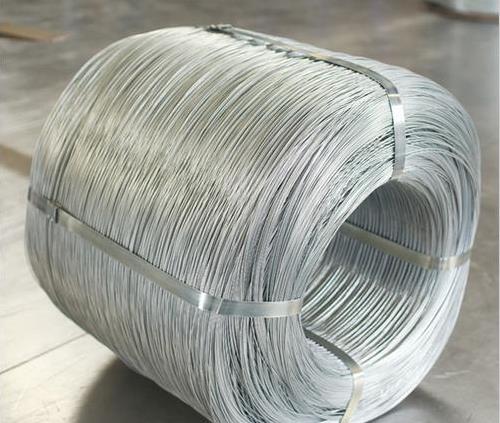
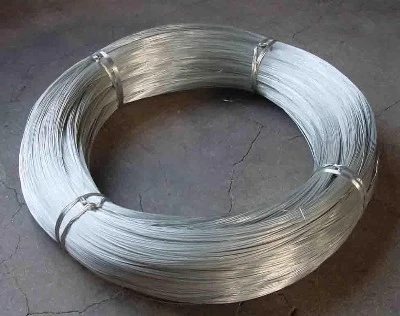
Steel wire: Usually refers to wire with a finer diameter (such as 0.1mm - 4mm) and higher strength, commonly used in precision manufacturing, weaving nets, etc.
Iron wire: Has a coarser diameter (such as 1mm - 10mm), traditionally used in binding, construction, etc. Both have the same galvanization principle, but the names vary based on application habits.

Galvanization Process Classification and Characteristics
Process Type Principle Zinc Layer Thickness Corrosion Resistance Typical Application Scenarios
Hot-dip Galvanizing Immersing the wire in molten zinc to form a composite coating of iron-zinc alloy and pure zinc 30 - 100μm High (5 - 10 years outdoor lifespan) Construction rebar, power transmission towers, marine engineering
Electro-galvanizing (Cold Galvanizing) Depositing a zinc layer on the wire surface through electrolysis, with high uniformity but thinner thickness 5 - 20μm Moderate (2 - 5 years outdoor lifespan) Electronic components, automotive parts, wire mesh
Mechanical Galvanizing Attaching zinc powder to the wire surface through physical impact, environmentally friendly and free of hydrogen embrittlement 10 - 30μm Moderate (3 - 5 years outdoor lifespan) Military, high-strength bolts.
Core Performance and Application Areas
Key Performance Advantages
Dual Corrosion Prevention Mechanism:
Physical Barrier: The zinc layer isolates oxygen and moisture from the base material.
Sacrificial Anode Protection: Zinc is more reactive than iron. When the coating is damaged, zinc corrodes first, protecting the wire (as shown in the right figure).
Strength and Toughness Balance: The low-carbon steel base material ensures tensile strength (300 - 700MPa), and the zinc layer does not affect the wire's flexibility, suitable for weaving, winding, etc.
Environmental Adaptability: Resistant to salt spray (coastal areas), acid and alkali (industrial exhaust), and extreme temperatures (-50°C to 150°C).
Typical Application Scenarios
Construction and Infrastructure: Scaffolding binding wire, concrete reinforcement mesh, bridge cable protection;
Agriculture and Animal Husbandry: Fencing, greenhouse support, livestock cages;
Industry and Manufacturing: Automotive brake pads wire, cable armor, mine support mesh;
Daily and Civil Use: Clothes drying racks, gardening ties, protective nets (such as anti-theft windows).
Industry Standards and Quality Indicators
International and Domestic Standards
Hot-dip Galvanizing: GB/T 13912 (China), ASTM A123 (USA), ISO 1461 (International);
Electro-galvanizing: GB/T 18226 (China), ASTM A153 (USA).
Core Quality Indicators
Zinc Layer Adhesion: Passes the winding test (zinc layer does not fall off after 3 times the diameter winding);
Zinc Layer Thickness: Hot-dip galvanizing ≥ 85μm (for heavy industrial scenarios), electro-galvanizing ≥ 12μm (for general environments);
Corrosion Resistance Test: In the neutral salt spray test (NSS), hot-dip galvanizing can withstand 500 - 1000 hours without white rust, and electro-galvanizing can withstand 200 - 500 hours. Industry Chain and Market Dynamics
Industry Chain Structure
Upstream: Zinc ingots (accounting for 30 - 40% of costs, prices affected by LME zinc prices), low-carbon steel wire rods;
Midstream: Galvanizing processing enterprises (such as clusters in Bazhou, Hebei and Wuxi, Jiangsu);
Downstream: Construction, agriculture, automotive, home appliances, etc.
Market Trends
Environmental Upgrading: Hot-dip galvanizing enterprises need to handle zinc dross and exhaust gases (such as SO₂), and some regions promote the "chromium-free passivation" process (replacing hexavalent chromium passivation, in line with RoHS standards); Technological Innovation: Alloy coatings (such as zinc-aluminum-magnesium coatings, which enhance corrosion resistance by 3-5 times) are gradually replacing traditional galvanizing and are being applied in high-end scenarios (such as photovoltaic support structures).
Global Competition: China is the world's largest producer (accounting for over 60%), with exports concentrated in regions with high infrastructure demand such as Southeast Asia and the Middle East.